
Wil Bakula: The Producer Behind the Name Nobody Can Stop Misspelling
The story everyone defaults to is that he walked away from Hollywood. You hear it in every celebrity-child profile, couched in terms of brave choice-making and authentic self-determination. Wil Bakula, son of Scott Bakula, chose music over acting, Oregon over Los Angeles, independence over legacy. And look, that story is not entirely wrong. But it flattens something real into a template, and it ignores the fact that his actual work — the stuff you can stream right now on Bandcamp — is being steadily reviewed, performed at festivals, and played on KCRW, and most of the people writing about him have apparently never listened to a single track.
That’s the thing that quietly irritates me. The biographical apparatus around Wil Bakula is almost entirely about his last name, when the reason to pay attention to him is foamboy.
See also “Walter Bridgforth Jr.: The Man the Story Never Quite Got Right“
Quick Bio
| Detail | Information |
| Full Name | Wil Bakula |
| Born | December 1995, United States |
| Parents | Scott Bakula (actor, b. October 9, 1954); Chelsea Field (actress, b. May 27, 1957) |
| Siblings | Owen Bakula (b. 1999, same parents); Chelsy Bakula (b. 1984, Scott’s daughter from first marriage); Cody Bakula (adopted, Scott’s son from first marriage) |
| Education | Willamette University, Salem, Oregon (reported) |
| Musical Work | Experimental collective Chromatic Colors (pre-2016); foamboy duo with vocalist Katy Ohsiek (2016–present) |
| foamboy Discography | Eating Me Alive (2024); My Sober Daydream (2021); lime, knife, time, hand EP; 2026’s Stupid Hot |
| Notable Recognition | KCRW, Consequence of Sound, Flood Magazine, Week in Pop |
| Location | Portland, Oregon |
Who He Actually Is
Here’s what the music press knows, and the celebrity-gossip press doesn’t seem to bother finding out. foamboy is a Portland-based pop duo. Wil Bakula produces the music and plays the instruments — keys, piano, synth, and more. Katy Ohsiek writes the lyrics and sings. They met in Salem, Oregon — almost certainly through Willamette University — and spent years before foamboy working together in an experimental musical collective called Chromatic Colors, which had a wide rotating cast of collaborators.
foamboy as a project began properly around 2016. The debut album, My Sober Daydream, was written during 2020 and released in October 2021. Its description from press materials sounds like indie-pop boilerplate until you hear it: jazz-influenced, danceable, with lyrics that are specifically and unsentimentally personal. Katy Ohsiek, in an interview about the album, cited Lucy Dacus as a lyrical influence — “She makes her experiences feel like yours, which is something I aspire to in my writing.” Wil described his influences as modern R&B, indie-pop, and classic 70s and 80s disco. The combination produces something that sounds like exactly none of those things and somehow all of them.
The debut landed recognition from KCRW, Consequence of Sound, Flood Magazine, and Week in Pop. That’s not nothing. Those are real outlets with real audiences.
The Family Context Everyone Leads With
Let’s be honest about what the name carries, because you can’t ignore it and pretending to ignore it is its own kind of distortion.
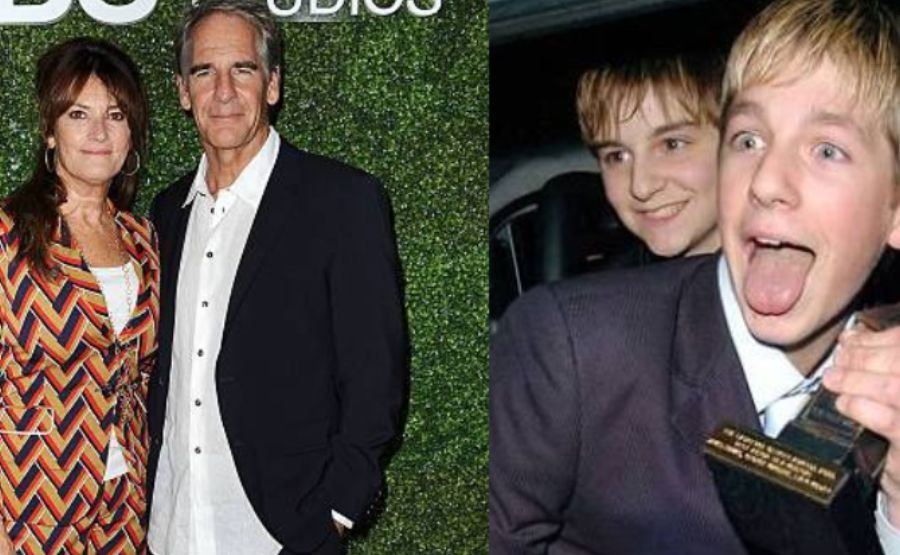
Scott Bakula plays Quantum Leap’s Sam Beckett. From Star Trek: Enterprise, he is Archer. He spent seven seasons on NCIS: New Orleans alongside Chelsea Field, who plays a character named Rita Devereaux. They married in 2009 after fifteen years of being together without formalizing it — which means Wil was born in 1995 to parents who were in a committed long-term partnership but not yet married, a detail that almost no celebrity profile manages to state plainly. Chelsea Field was born Kimberly Botfield in Glendale, California, and made her name in 1980s films including Masters of the Universe and The Last Boy Scout.
Scott’s ancestry is Czech-Bohemian on one side. He began performing in the fourth grade. He once said he sang with the St. Louis Symphony. He is, in other words, not a man who happened to be a performer — he was formed for it from childhood.
Wil is the first of Scott and Chelsea’s two sons. Owen followed in 1999. Scott also has Chelsy (b. 1984) and Cody (adopted, b. 1991) from his first marriage to Krista Neumann. So when various sites call Wil the “eldest of Scott Bakula’s children,” they’re wrong — Chelsy is a decade older. In contrast, Wil is Scott and Chelsea’s oldest son.
This matters because the “walked away from Hollywood” narrative depends on framing Wil as the firstborn heir to a dynasty who made a different choice. The actual picture is more complicated. Wil grew up as the younger sibling of children from a first marriage that ended when he was still a baby. His father was building a second career through Star Trek: Enterprise and NCIS: New Orleans while simultaneously being largely absent from Los Angeles for much of Wil’s adolescence and early adulthood. The “Hollywood family” Wil is supposed to have left is more of an idea than a lived reality.

The Oregon Pivot Nobody Fully Explains
You get asked about this, you know? Why Oregon? Why Willamette? Why Salem and then Portland rather than USC or NYU or Berkeley?
The answer, as far as anyone has documented it, is simply that it’s where he went. Willamette University in Salem is a small, respected liberal arts school in the mid-Willamette Valley. It’s not a conservatory and it’s not a music industry pipeline school. It’s a place where you study music seriously but in an academic rather than commercial context.
That context produced Chromatic Colors, the experimental collective where Wil and Katy Ohsiek first collaborated. The word “experimental” is doing real work there — this was not polished pop. This was the kind of wide-open collaborative music that happens when people in their early twenties are figuring out what they actually hear when they listen. The collective rotated through instrumentalists, tried different directions, and provided the working relationship that would eventually become foamboy.
The foamboy name itself is not precious. Katy Ohsiek explained it in an interview: the name came from a roadside advertisement for a company called The Foam Man, spotted outside Corvallis, Oregon. “I suppose they fix couches?” she said. There’s something disarming about a duo that earns KCRW placement under a name inspired by furniture repair.
My Sober Daydream: The Album That Established Something Real
The debut was written almost entirely remotely in 2020 — Wil sent demos, Katy wrote over them from wherever she was. The distance gave the album a particular texture: a kind of introspective disconnection that suits the lyrical themes. One reviewer for I Am Tuned Up called it “progressive without pretension, avant garde with honesty,” and that’s about right.
The standout moment from that piece was a quotation from the lyrics: “Staring down twenty-three / wore my sleep mask to work / only been here a year / fifty hands on my shoulder / assure me I’m still young.” That’s a specific kind of generational observation — the irony of being young but already feeling surveilled by an anxious culture performing encouragement at you.
Look, I want to be careful not to over-attribute the writing to Wil when Katy is clearly the primary lyricist. The division here is relatively clean: Wil builds the sonic architecture, Katy populates it with text. But the architecture matters. The production choices on My Sober Daydream are what let those lyrics land. The “cartoon laundromat” quality one reviewer noticed in a track called “Laundry” — “all spinning synths and bubbling bass” — that’s Wil’s decision-making. That’s the producer’s intelligence choosing exactly the right kind of busy.
Eating Me Alive and the Tour That Confirmed Something
The second album arrived in March 2024. The Portland Mercury described the band’s writing process as “emotional catharsis,” and the record has a somewhat heavier undertow than the debut — Ohsiek’s lyrics moving through a bad breakup with the specificity of someone who has decided not to be tasteful about it.
What the second album did differently was infrastructure. foamboy played Pickathon, the Portland-area independent music festival that functions as a genuine barometer of Pacific Northwest indie credibility. They played Timberfest, Belltown. They did a west coast tour. They charted on KCRW and multiple college radio stations.
This is not a celebrity kid doing music as a lifestyle accessory. You do not tour college radio circuits on your father’s fame. KCRW doesn’t play your record because of your last name. The infrastructure around the second album was built the way independent artists build it: slowly, through press campaigns, live performance, and radio relationships. The SXSW 2023 listing for foamboy shows them explicitly seeking label deals, brand partnerships, and sync placements. That’s a band doing the unglamorous work of industry navigation.
What the Content Farms Got Wrong
Let me compile this, because the contradictions are significant and some of them are outright damaging to the record.
One site confidently lists Wil’s role as “keyboardist in Chromatic Colors band.” foamboy is his current project. Chromatic Colors was the earlier collective. He is the producer of foamboy, not just a keyboardist. That distinction matters enormously if you’re trying to understand what he actually does.
Several sites invent a detail where Wil “once opened for a Star Trek convention band, nodding to Dad without joining stage.” No source. Pure fabrication. Wil has apparently done exactly the opposite — made a career entirely divorced from his father’s fanbase in science fiction television.
Multiple sites quote a net worth of “$300,000,” which is stated with the same confidence as if it were an audited financial disclosure. It is not. Nobody knows Wil Bakula’s net worth. He is an independent musician in Portland.
The birth year confusion is persistent. Several pieces confuse Wil (December 1995) and Owen (1999), sometimes inverting the order or giving Wil the wrong year. One piece states Wil was born in 1999 “from Scott’s second marriage to Chelsea Field in 2009” — which would make the timeline anatomically problematic, since he would have been born a decade before the marriage that supposedly produced him.
The “eldest son” framing is everywhere and almost universally imprecise. He is the eldest son of Scott and Chelsea. He is not the eldest of Scott’s four children.
The Third Album and What It Says About the Trajectory
STUPID HOT arrived in 2026 as a self-released third album. The Beats Per Minute review, which is the most substantive critical response available, gave it 70% and had specific things to say about both its strengths and limits. “Bakula is a talented producer and he has a keen ear for busy rhythms and decoration,” the review noted, before adding that the album “lacks in an organic and handmade feeling that their previous album had.”
That criticism is real and worth sitting with, not dismissing. lime, knife, time, hand, the EP that preceded STUPID HOT, was described as showing “more daring in terms of range.” The suggestion is that foamboy’s evolution has been toward a certain kind of polish — danceable, summer-ready, mood-correct — at some cost to the rawer qualities that made My Sober Daydream surprising.
This is what an actual career arc looks like, with actual critical friction. You don’t get a 70% review if you’re a novelty project or a celebrity hobby. You get a 70% review when someone is taking you seriously enough to note what’s missing.
What Doesn’t Get Said
Here’s the thing I keep coming back to when I think about Wil Bakula’s position in the world. The machinery around him — the celebrity-child profiles, the content farm bios — consistently frames his story as a departure from something. He chose not to act. He moved away from Hollywood. He resisted the easy path.
But the actual story is that he stayed close to a collaborator he met in college, built a working relationship over years, and has now released three albums and an EP of original music, toured the Pacific Northwest, earned real press coverage, and continues to develop as an artist. That’s not a story about leaving something. That’s a story about committing to something.
The bitterness I feel about the coverage is specific: it keeps describing him in terms of what he isn’t rather than what he is. He is not an actor. He is not famous. He is not cashing in on his name. Fine. But he is a producer with a demonstrated ear, a track record of genuine collaboration with a skilled vocalist, and a body of work that earns reviews from outlets that don’t do favors.
See also “Walter Bridgforth Jr.: The Man the Story Never Quite Got Right“
Final Words
Here’s my honest judgment: Wil Bakula is in the middle of building something real. Not a legacy project, not a famous-kid hobby, not a footnote to his father’s career. A real independent music career with all the grinding that implies — college radio campaigns, small festival slots, self-released albums, an actual critical conversation about whether the new record is as adventurous as the last one.
The coverage doesn’t serve him. It reduces him to a name and a choice, then invents fabricated details to fill the space left by a life he has chosen to keep private. He opened for a Star Trek convention band? No. He has a net worth of $300,000? Nobody knows. He majored in music at Willamette and then built foamboy from a Salem collaborative? That part is likely true and the only part that actually explains him.
If you’re going to follow this story — and I think you should, because the music is genuinely good — start with My Sober Daydream on Bandcamp. Then track forward through Eating Me Alive. By the time you reach STUPID HOT and notice the reviewer’s reservation about polish over rawness, you’ll have enough context to have an actual opinion rather than just a name.
FAQs
1. Who is Wil Bakula?
He is an American musician and record producer, born December 1995, and one half of the Portland-based pop duo foamboy. He is also the son of actor Scott Bakula and actress Chelsea Field.
2. Is Wil Bakula an actor like his father?
No. He has not pursued an acting career. His work is entirely in music production, songwriting, and instrumentation.
3. What is foamboy?
Katy Ohsiek, the singer, and Wil Bakula, the producer, are a pop duo from Portland. Their sound has been described as jazz-influenced danceable pop with hyper-personal lyrics. They have released three albums — My Sober Daydream (2021), Eating Me Alive (2024), and STUPID HOT (2026) — plus the lime, knife, time, hand EP.
4. How did foamboy form?
Wil and Katy Ohsiek met in Salem, Oregon — presumably through Willamette University — and collaborated for years in an experimental collective called Chromatic Colors before starting foamboy around 2016.
5. Is Wil Bakula the eldest of Scott Bakula’s children?
No. Scott Bakula has four children: Chelsy (b. 1984) and Cody (adopted, b. 1991) from his first marriage to Krista Neumann, and Wil (b. 1995) and Owen (b. 1999) with Chelsea Field. Wil is the eldest of Scott and Chelsea’s two sons together, but not the eldest of all four siblings.
6. When did Chelsea Field and Scott Bakula tie the knot?
They married in 2009, after approximately fifteen years together. Both Wil (1995) and Owen (1999) were born before their parents married.
7. Has foamboy received serious critical attention?
Yes. My Sober Daydream earned recognition from KCRW, Consequence of Sound, Flood Magazine, and Week in Pop. Eating Me Alive charted on KCRW and college radio. STUPID HOT received a review from Beats Per Minute noting Wil as “a talented producer with a keen ear for busy rhythms.”
8. Where does Wil Bakula live now?
Portland, Oregon, where foamboy is based.
9. What is Chromatic Colors?
The experimental musical collective in Salem, Oregon where Wil and Katy Ohsiek first collaborated, working with a wide rotating group of instrumentalists. It preceded foamboy and is where the core partnership between the two was established.
10. Why does so much wrong information exist about Wil Bakula?
Because most pieces are written about the name Bakula rather than about Wil’s actual work. The celebrity-child profile genre fills gaps with fabrication — invented net worth figures, invented anecdotes, wrong birth years — because the goal is content production around a searchable name, not accurate journalism.
11. Where can you find foamboy’s music?
Bandcamp, Spotify, and streaming platforms. Their Bandcamp page lists their full catalog including the Eating Me Alive Deluxe Edition with additional B-side tracks. The most reliable way to understand what Wil actually does professionally is to listen.



One Comment