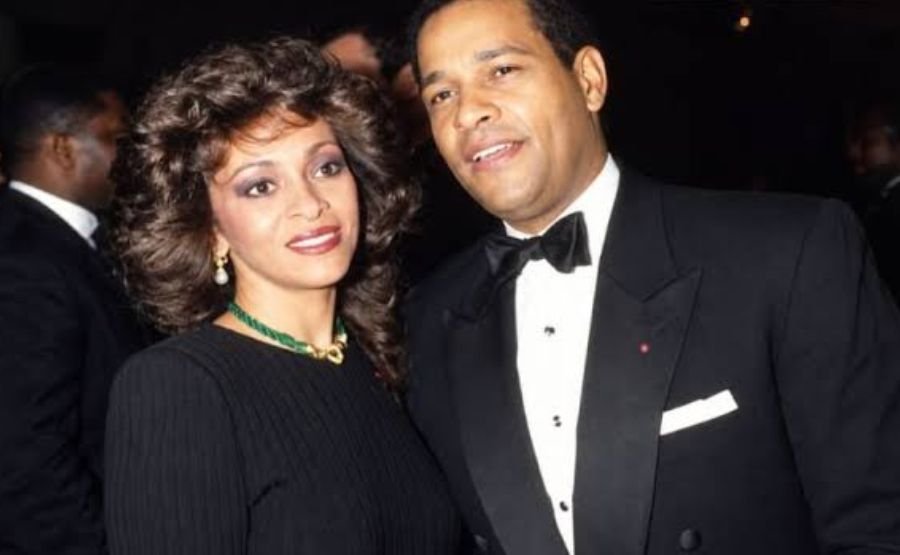
JUNE BARANCO: The Woman Who Got Erased While Everyone Was Watching
The story you’ve been told about June Baranco is not really about June Baranco at all. It’s about Bryant Gumbel — his career, his affair, his divorce settlement, his next wife. June is there mainly as a device: the wronged first wife who said something quotable about her heart getting shot and then obligingly stepped back into the fog. That’s the version. And you can find fifty identically structured articles parroting it without one original question asked.
Let me try something different.
See also “Bryan Spies: The Man Who Exists in Three Different Biographies at Once“
Quick Bio
| Detail | Information |
| Full Name | June Carlyn Baranco |
| Born | June 22, 1948, Baton Rouge, Louisiana |
| Education | BFA, Louisiana State University (graduated approx. 1971) |
| Early career | Flight attendant, Delta Airlines (late 1960s–early 1970s) |
| Marriage | Bryant Gumbel, December 1, 1973 |
| Children | Bradley Christopher Gumbel (b. ~1978), Jillian Beth Gumbel (b. ~1984) |
| Separation | June 1997 |
| Divorce finalized | August 21, 2001 |
| Settlement | Westchester estate, Upper East Side apartment, reportedly ~50% of ex-husband’s estimated $20M fortune |
| Post-divorce identity | Visual artist; member of Salmagundi Club, Artist Fellowship of New York, Portrait Society of America |
The Version That Gets Recycled
Here’s what basically every piece on June Baranco will tell you: she was a flight attendant, she married Bryant Gumbel in 1973, they were Catholic, they had two kids, he cheated, she called him a “serial adulterer,” he moved in with a leggy blonde from Goldman Sachs named Hilary Quinlan, there was a bitter four-year legal fight, and then June walked out of Westchester Supreme Court on August 21, 2001, divorce finalized, looking composed and moving on with quiet dignity.
That’s the template. Every single article follows that arc. And look, none of it is technically wrong. But it’s also just… the surface. The part that fit in a gossip column.
What nobody really lingers on is the twenty-eight years before all that. Or the woman who existed inside them.
How They Met, and What That Actually Tells You
The couple met in the late 1960s through a mutual connection — one of June’s friends was dating Bryant’s brother, Greg Gumbel. She was sixteen or seventeen. He was unemployed, by some accounts wearing a broken-down pair of sneakers when they first crossed paths. Take a moment to consider that. She’s a teenager from Baton Rouge with a fine arts degree in her future, and this man is nothing yet. Not famous. Not secure. Not the co-anchor of the Today show.
They marry in December 1973. He’s twenty-five, she’s twenty-five. She’s already working as a flight attendant, already mobile, already someone with a life of her own. Within a few years, she will build a home around a man whose career is ascending at the kind of speed that tends to consume everyone nearby.
I want you to think about what that means, practically. She is Catholic. She believes in the institution. She is raising two children — a son, Bradley, born around 1978, and a daughter, Jillian, born around 1984 — while her husband is one of the most visible morning television personalities in America. There is no private life in that household. There is his career, and then everything else.

The Years Nobody Counts
Here is the gap that bothers me most about the standard coverage. The marriage runs from 1973 to the separation in 1997. That’s twenty-four years. The divorce proceedings get enormous coverage. The initial meeting gets a sentence or two. But what about everything in between?
In 1982, Bryant Gumbel joined the Today show as a co-anchor. That is nine years into their marriage. June is thirty-four. She has a five-year-old and is either pregnant with or has recently had Jillian. So she is managing two small children and a husband who is suddenly, overnight, a national face. A face that appears in America’s living rooms every morning before coffee.
I think about the 1989 memo scandal — when Gumbel wrote a confidential critique of his Today show colleagues that got leaked to the press, embarrassing his coworkers and himself. There is no public record of what June Baranco thought about any of this. That’s the thing. For two and a half decades, she has opinions, fears, assessments, a whole internal life, and none of it shows up anywhere. She’s listed as “wife” in the margins.
The conventional narrative calls these “quiet years.” I’d call them invisible years. There’s a difference.
The Art, Which Nobody Leads With
Let’s be honest about what actually gets ignored. June Baranco is a serious visual artist. Not a hobby painter, not a “she took up painting after the divorce” narrative — an artist with real institutional affiliations. She is a member of the Salmagundi Club, one of the oldest professional artist organizations in the United States, founded in 1871. She holds membership in the Artist Fellowship of New York and the Portrait Society of America. She has done commissioned portrait work, including work connected to Southern University in Baton Rouge — apparently a portrait of her grandfather.
Now look at the birth date. She graduated from LSU with a BFA around 1971. Then she takes work as a flight attendant. Then she meets Bryant. Then twenty-eight years of marriage. Then, in her early fifties, the art comes back into the public record.
You might read that as: “she rediscovered herself after the divorce.” Fine. But you could also read it as: the art was always there and got buried under someone else’s schedule. Which is it? I honestly don’t know. And the fact that nobody has ever asked her directly about this, in any piece I could find, is telling.
What She Actually Said
Most articles cite the same single quote from June. In a rare interview during the divorce proceedings, she said: “You’ve got to understand. I love my husband very much. I still do now. He shot me through the heart! This man apparently doesn’t care if I eat or not.”
That quote gets used in two ways. Sometimes it’s used to illustrate her pain. Sometimes it gets the “she was still in love with him” spin, which flattens it into sentiment. But notice what she actually says. She isn’t performing betrayal. She’s performing something more uncomfortable — she still loves him. She says so plainly. And then she says he doesn’t care if she eats.
That combination — love and complete abandonment — is more complicated than the victimhood narrative that gets built around it. She’s not asking for pity in that quote. She’s stating facts about a person she knows deeply and still, in that moment, cares about. The coverage almost never sits with that complexity.
She also, through her attorney Barry Slotnick, made public that she was fighting over a Westchester property that contained her art studio and the last items belonging to her late father. Her brother Joe had died in 2006 — though sources disagree on the timeline here, and some place this after the divorce — but the point is that she was fighting for her things, her work, her family’s memory. Not just financial leverage.
The Settlement and the Numbers Problem
Here is where I start to get genuinely irritated at the coverage. Multiple sources report that June Baranco received “50 percent of Bryant Gumbel’s estimated $20 million fortune” in the divorce. Which would be $10 million. Some sources cite $5 million as what she “charged” him. One source, Celebsgraphy, says she received $5 million. ABC News reported she got the Upper East Side apartment, the Westchester estate, and 50 percent of his net worth — but noted that the actual details of the settlement were sealed.
Sealed. The details were sealed. Every article that gives you a confident figure is therefore either guessing or repeating another article’s guess. The New York Post reported those property details, which got picked up and recycled. But nobody actually knows the terms. And yet the “$10 million settlement” appears as fact all over the internet.
This matters because it shapes how June gets perceived. If she walked away rich, the story becomes “she won.” If she didn’t, the story is different. We don’t know. What we do know is that it was bitter enough to drag out for four years, that she filed for legal separation in January 2000, then escalated to divorce, then tried to add adultery as grounds in January 2001, and that Bryant’s lawyers denied the serial adultery claim even while he acknowledged starting a relationship with Hilary Quinlan after leaving the marital home. His own admission about Hilary undercuts the denial pretty significantly. But again — the press accepted the contradiction and moved on.
The Contradictions Nobody Wants to Address
You want contradictions? I’ll give you three.
One: Multiple sources describe June’s background differently. Blackpast.org describes her as “a flight attendant.” Several entertainment sites call her an “artist and designer.” One source — dating her birth as September 29, 1948, which is actually Bryant’s birthday, an obvious error — lists her as born in New Orleans, not Baton Rouge. One source places her birth date as March 15, 1985, making her impossible as Gumbel’s 1973 wife. The proliferation of AI-generated content scrapers has made June Baranco’s basic biographical facts almost unreliable at this point.
Two: Sources disagree about whether her identity before Bryant was primarily that of a flight attendant or a practicing artist. The flight attendant label dominates the celebrity-gossip pipeline. The BFA from LSU and her current professional affiliations suggest the art was always central. These aren’t mutually exclusive, but the flight attendant framing subtly positions her as someone whose life didn’t really begin until she attached herself to a famous man.
Three: The children. Bradley Gumbel served as his father’s best man when Bryant married Hilary Quinlan in 2002 — just one year after the brutal, contested divorce from his mother. One source makes a point of telling you this as though it demonstrates that the family reconciled gracefully. But step back and think about what it required of Bradley — and what it says about how each parent handled the aftermath. June is described uniformly as having co-parented cooperatively. The question of what that actually cost her is never asked.
The Quiet Bitterness of Invisibility
Look, I’m not trying to make June Baranco into a martyr. She is not a tragic figure. She seems, from everything I can piece together, to be a woman who built a real creative life out of the wreckage of a marriage to a difficult and apparently faithless man. She paints. She’s affiliated with serious institutions. She is connected to her Louisiana roots in a meaningful way — the portrait of her grandfather for Southern University isn’t a vanity project; it’s a person maintaining her lineage.
But I do have a kind of slow-burning frustration on her behalf when I read these articles. Because you can see the structure of dismissal operating in plain sight. She gets described as showing “quiet strength.” She “lived privately.” She “chose to focus on family.” These are phrases that get applied to women when writers don’t know anything about them and don’t want to say so. “Quiet strength” is what you write when you mean “she didn’t give us enough to work with.”
The truth is that nobody gave her enough space to work with. One reporter. One interview. One quote. Twenty-eight years of marriage, two children, a career as an artist, a community in Louisiana, membership in professional art organizations — and what we have is one quote about being shot through the heart and a dispute over a Westchester estate.
That’s not her being quiet. That’s us not listening.
The Bradley Problem
I keep coming back to this. In August 2002, Bradley Gumbel stood beside his father at the Breakers Hotel in Palm Beach while Bryant Gumbel married the woman his mother had accused of being part of the reason their family fell apart. He was the best man. He was maybe twenty-three or twenty-four years old.
Every piece uses this as evidence that the divorce “ended amicably.” I’m not sure that’s what it is. I think it’s evidence that children of high-conflict divorces do complicated things to survive them. Bradley’s presence at that wedding doesn’t tell us anything about whether June was okay with it. We don’t know. Nobody asked.
See also “Bryan Spies: The Man Who Exists in Three Different Biographies at Once“
Final Words
What I think, after going through all of this, is that June Baranco got exactly what happens to a lot of women who build their lives around famous men and then watch those men leave. She got reduced. She got turned into a supporting character in a story she lived from the center of.
The art affiliations are real. The quote is real. The bitterness of the divorce is real. What isn’t real is the neat narrative of “resilience and quiet strength” that gets stapled onto her story by writers who want to treat her life like a lesson in graceful acceptance. She said her husband shot her through the heart. That’s not a graceful acceptance. That’s a woman telling the truth about how much it hurt.
I’m not interested in judging Bryant Gumbel here — that’s a separate project. What I’m interested in is the person who sat inside that marriage for twenty-eight years, raised two kids, kept her art alive, fought a four-year legal battle, got described as a “flight attendant” in almost every serious biographical note, and is now living somewhere in New York or Louisiana, painting portraits of her grandfather, and generally being ignored by everyone who spent three years fascinated by her divorce.
You deserve better research than that, June. Not that you’re reading this.
FAQs
1. Who is June Baranco?
She is an American visual artist, born June 22, 1948, in Baton Rouge, Louisiana. She’s primarily known as Bryant Gumbel’s first wife, which already tells you everything wrong with how her story gets told.
2. When did June Baranco and Bryant Gumbel get married?
December 1, 1973. They met in the late 1960s when she was about sixteen or seventeen, through a mutual connection involving Bryant’s brother Greg.
3. How long were June Baranco and Bryant Gumbel married?
Officially 28 years — married in 1973, divorced August 21, 2001. The practical marriage ended when Gumbel left in June 1997.
4. Why did they divorce?
June accused Bryant of serial adultery. He denied the full extent of the allegations but acknowledged starting a relationship with Hilary Quinlan, his current wife, after leaving the marital home. The divorce took four years to finalize.
5. What did June Baranco get in the divorce settlement?
The Westchester estate, the Upper East Side apartment, and reportedly around half of Gumbel’s estimated $20 million fortune — but the actual settlement was sealed, so every number floating around is guesswork.
6. What does June Baranco do now?
She’s a working artist. She’s affiliated with the Salmagundi Club, the Artist Fellowship of New York, and the Portrait Society of America. She has done commissioned portraits, including work tied to Southern University in Baton Rouge.
7. Did June Baranco remarry?
Unknown. No credible source has confirmed whether she remarried after 2001. Most articles say it’s “unclear,” which is honest, at least.
8. What was June Baranco’s famous quote about the divorce?
She said: “You’ve got to understand. I love my husband very much. I still do now. He shot me through the heart! This man apparently doesn’t care if I eat or not.” It’s the one line everybody knows and almost nobody contextualizes properly.
9. Did June Baranco have children with Bryant Gumbel?
Yes. Bradley Christopher Gumbel, born around 1978, and Jillian Beth Gumbel, born around 1984. Bradley famously served as his father’s best man when Bryant married Hilary Quinlan in 2002, one year after the divorce.
10. Was June Baranco a flight attendant?
Yes, she worked as a flight attendant, reportedly for Delta Airlines in the early 1970s. But she also holds a BFA from LSU and has a serious, long-running career as a visual artist that almost all the coverage buries under the flight attendant framing.
11. Where does June Baranco live now?
Somewhere in New York or Louisiana, based on her art affiliations and family connections. She lives privately and has not sought public attention since the divorce, which given everything, is probably a reasonable choice.
Explore ideas that enrich your mind with The Aura Magazine.






One Comment