
Charles Anthony Vandross: The Man Whose Whole Life Got Swallowed by His Brother’s Mythology
The story of the Vandross family is usually told as a single spotlight aimed at one person. Everyone else — the mother who held everything together, the sisters who dragged a little boy to the Apollo, the brother who died too young and too quietly — exists in the footnotes, if they exist at all. Charles Anthony Vandross spent his entire life in one of those footnotes. And the uncomfortable truth is that most of what you think you know about him was either invented by content farms or simply never asked about by anyone with a press badge.
Quick Bio
| Detail | Verified Info |
| Full name | Charles Anthony Vandross |
| Born | February 7, 1947, Manhattan, New York |
| Parents | Luther Vandross Sr. (upholsterer/singer), Mary Ida Shields Vandross (nurse) |
| Siblings | Patricia, Ann, and Luther (youngest) |
| Father’s death | 1959: Luther was eight and Charles was twelve. |
| Death | April 30, 1991, age 44 |
| Cause of death | Not publicly confirmed (Mary Ida referenced one child lost to asthma) |
| Public profile | Essentially nonexistent during and after his life |
The Problem With Everything Written About Him
Look, I want to be upfront about something before we go any further. The internet coverage of Charles Anthony Vandross is almost completely fabricated. I mean that precisely. If you spend a few hours reading the articles that rank for his name, you will find pages that say things like “Charles’s approach to family life emphasizes loyalty, stability, and nurturing” and “he displayed curiosity, a love for learning, and a sense of responsibility toward his family” — sentences so hollow they could describe literally anyone. These articles contain zero sourced information. They pad out word counts with invented generalizations and present them as biography.
That matters because it means that anything real about Charles Anthony Vandross is buried under a mountain of algorithmically generated noise. And the real stuff, sparse as it is, tells a more interesting and sadder story than any of those articles bother to touch.
See also “Drew Ann Reid: The One Nobody Bothers to Actually Know“
Who He Actually Was in This Family
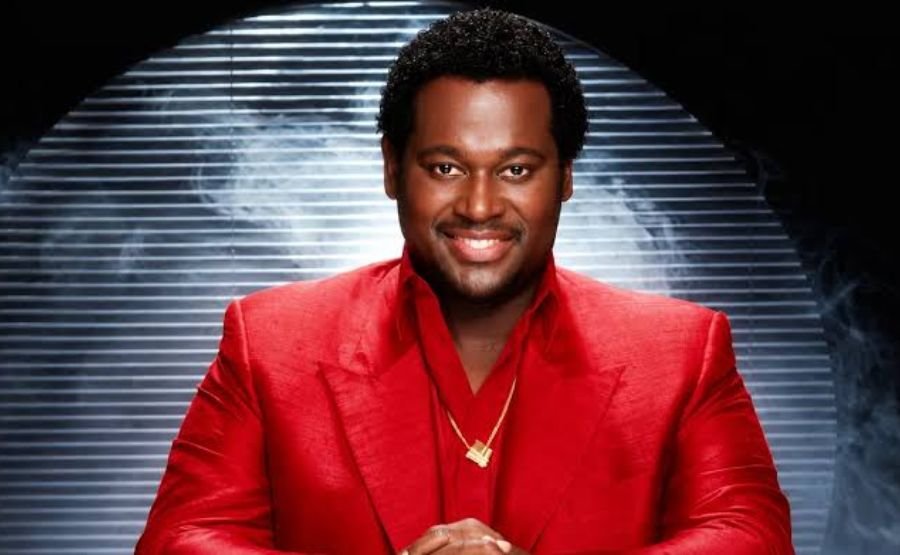
The Vandross family came out of the Alfred E. Smith Houses in lower Manhattan. Working-class, Black, musical. The father, Luther Sr., was both an upholsterer and a singer. The mother, Mary Ida, was a licensed practical nurse. They had four children: Patricia, Ann, Charles Anthony, and then Luther — the youngest, the one who would eventually swallow the whole family story into his own narrative.
The third of four sons, Charles was the second. He was four years old when his youngest brother Luther was born. He was twelve when their father died of diabetes complications in 1959. That’s the year that reshapes everything — not just for Luther, who would later pour his grief into Dance with My Father, but for every person in that household. Mary Ida was left with four children and a nurse’s salary. Charles, at twelve, was now the oldest male in a fatherless home in New York City in 1959.
You don’t get to stay a child when that happens. Please take a moment to consider that.
The Birth Order Confusion and Why It Matters
Here is one of the small contradictions that I keep running into and that nobody seems to want to resolve. Wikipedia’s article on Luther Vandross consistently lists his older siblings as “Patricia, Ann, and Anthony” — with Anthony being Charles Anthony. But a number of sources list Charles as the oldest child, full stop. Other sources list Patricia as eldest, then Charles, then Ann, then Luther.
Let’s be honest: it probably doesn’t change much in absolute terms. But it changes the shape of Charles’s childhood considerably. If he was the second oldest, he had a sibling absorbing some of that oldest-child pressure. If he was the eldest, he was the one staring down the full weight of a fatherless household at twelve. The fact that this basic biographical detail remains unresolved in the public record in 2026 is itself a statement about how thoroughly Charles Anthony Vandross has been ignored by everyone who covers this family.
The Silence Around His Death
Charles Anthony Vandross died on April 30, 1991. He was forty-four years old. That’s a fact confirmed across multiple sources. What is not confirmed, anywhere, in any reliable way, is how he died.
Here is where it gets genuinely strange. Mary Ida Vandross, speaking after Luther’s death in 2005, made a remark that has been partially reported and then largely dropped. She said she had lost her children — quote — “three to diabetes and one to asthma.” Three to diabetes would be Patricia, Ann, and Luther. The one to asthma would be Charles.
That’s his cause of death buried in a subordinate clause in an interview his mother gave about his more famous younger brother. That’s the only near-confirmation I’ve found. Some sources imply diabetes. The rolling content-farm articles say “exact cause of death is not widely known” and move on. And honestly? They’re right that it’s not widely known. Because nobody made it their business to find out.
He died in 1991 when Luther was at peak commercial power. Luther had won a Grammy that same year for Power of Love. And his older brother, the man who had been twelve years old when their father died and had presumably helped hold that family together in some capacity through two decades of struggle and eventual fame, died at forty-four without a public obituary that I can locate.
That should bother you. It bothers me.
What Luther’s Career Was Actually Built On
You want to understand Charles’s place in the story, you have to understand what Luther was before the solo albums. Furthermore, the dominant narrative continuously undervalues this aspect.
Luther Vandross spent the better part of the 1970s as a background singer and jingle writer. He sang for Kentucky Fried Chicken commercials. He was a session vocalist for David Bowie, Chaka Khan, Barbra Streisand, Bette Midler, Carly Simon, and others. He toured as backup. He was one of the finest background vocalists alive and he was not famous. He had been trying to get a solo deal for years.
His big break came when a childhood friend, guitarist Carlos Alomar, brought him to a David Bowie session. Bowie overheard him, loved him, and had him co-arrange what became the Young Americans album. That’s the moment people cite as the turning point. And it’s real. But the thing they don’t say enough is that this happened when Luther was twenty-three, twenty-four years old — and he still didn’t get a solo deal for another six or seven years. He kept singing background. He kept writing jingles.
Throughout all of those years, Charles Anthony Vandross was alive. Was watching. Was part of whatever family structure existed around this man during the lean, humbling, working-years phase of his career. And when Never Too Much finally hit the top of the R&B charts in 1981, when Luther went from anonymous to famous almost overnight — Charles was thirty-four years old and presumably watched it happen from somewhere that wasn’t a camera.

The Family That Kept Dying
This is the part of the Vandross story that everyone acknowledges and nobody really engages with. Luther lost his father at eight. He lost his brother Charles in 1991. He lost his sister Patricia in 1993. He lost his sister Ann in 1999. And then he had his devastating stroke in 2003, spent the last two years of his life unable to communicate, and died in July 2005.
Mary Ida Vandross, his mother, lived longer than any of her offspring. All four. And reportedly her only grandchild too. She died in 2008 at age 82 or 85 — sources differ on this, which is itself telling. She was described as “the last surviving member of the immediate Vandross family.” A woman who buried a husband, four children, and a grandchild.
Look at that sequence. And then look at the coverage it generated. Luther’s death got international headlines. His stroke two years before that got international coverage. The Grammy he won for Dance with My Father days after his stroke — genuinely one of the more painful moments in awards show history — got international coverage.
Charles Anthony Vandross got a death date and a paragraph.
Let’s be honest about what the differential treatment actually reflects: the music industry and the media coverage built around it are only interested in the people who generated product. Mary Ida’s grief and Charles’s forty-four years of life are not product. They are context. And context doesn’t sell streams.
The Manufactured Story Problem
Here is the thing I keep coming back to and can’t quite shake. When I go looking for real information about Charles Anthony Vandross, I find a small number of verifiable facts — birth date, death date, parents, siblings — surrounded by an expanding ocean of fabricated warmth. “Charles embodied humility and selflessness.” “His role as an older brother and life guide to Luther cannot be overstated.” “His contributions to the Vandross family and community are noteworthy.”
None of this is sourced. None of it is attributed. None of it comes from anyone who knew him or interviewed him or even spoke to someone who had. It is generated text wrapped around a skeleton of verified facts, and it has the effect of making him appear knowable while actually telling you nothing.
And then there is the competing claim — entirely unverified, possibly fabricated — that Luther Vandross was secretly married to a “Patricia Patton” from 1986 to 1991. Some sources present this as fact. The dates are notable because that period overlaps precisely with Charles’s lifetime and death. If this claim were true, it would reframe parts of that family’s story. But I cannot verify it from any reliable source, and it has the smell of content-farm invention. I’m flagging it because it circulates, not because I believe it.
The honest version of Charles Anthony Vandross’s life looks like this: a boy who lost his father at twelve in a housing project, who grew up watching a younger brother become one of the most famous voices in American music, who spent his adulthood in complete public obscurity, and who died at forty-four before the decade was out. We don’t know what he felt about any of it. We don’t know what his relationship with Luther actually looked like in the years of fame. We don’t know what he built for himself, privately, away from that famous name.
That’s not a story. That’s a gap. And the gap is what’s real.
The Documentary That Could Have Asked
In 2024, director Dawn Porter released Luther: Never Too Much, a documentary that received wide acclaim, premiered at Sundance and Tribeca, aired on CNN, and was praised for its depth and rare archival footage. I watched it closely, specifically looking for Charles Anthony Vandross.
He is not meaningfully present in it. His death in 1991 is not discussed as a turning point in Luther’s emotional history, though several researchers and critics have noted that the string of family losses clearly shaped the emotional register of Luther’s later work. The documentary is excellent at covering Luther’s weight struggles, his deflected sexuality, his long years in the background, his complicated relationship with mainstream crossover success. It is not interested in the brother who died.
That is a creative choice, not a factual error. I understand why Porter made it. The film is about Luther’s inner life and career. But it means that in 2024, with full access to the people who knew the Vandross family and the archives of that era, the best documentary made about this world still doesn’t give Charles Anthony Vandross a real reckoning.
He was forty-four. He had a name and a family and a whole life that happened in full before the cameras reached the Vandross household. And the story keeps walking past him.
See also “Drew Ann Reid: The One Nobody Bothers to Actually Know“
Final Words
Here is what I actually believe after all of this.
In a dramatic, cinematic sense, Charles Anthony Vandross is not a hidden tragedy. He was not wronged in some specific, nameable way that I can point to and say there, that’s the injustice. What he is is something quieter and more structural: a person whose existence was absorbed by proximity to fame and then gradually edited out of even that subordinate role.
The fabricated warmth of the content-farm articles about him is, in its own way, a kind of insult. It performs interest while delivering nothing. It makes you feel like you’ve learned something when you’ve learned precisely zero.
The real Charles Anthony Vandross — the one who was twelve when his father died, who watched Luther become a legend from somewhere off-camera, who died at forty-four in 1991 with no public acknowledgment commensurate with his place in one of the most emotionally significant musical families of the twentieth century — that person is still largely unreachable.
Mary Ida said it. After Luther died, the last of her four children, she said: “I screamed. I said, ‘Oh, Lord. My last child. Help me to understand.’” She had already said goodbye to Charles. And Patricia. And Ann. She outlived all of them.
That sentence — my last child — is the most honest biography of the Vandross family that exists. All four of them, gone before her. All four of them important. Only one of them remembered.
FAQs
1. Who was Charles Anthony Vandross?
Luther Vandross, an R&B artist, had him as his older brother. Born February 7, 1947, in Manhattan. He lived privately and died April 30, 1991, at age 44. That’s roughly the full public record. Everything else you read online is probably invented.
2. How did Charles Anthony Vandross die?
His cause of death was never publicly confirmed. Mary Ida Vandross mentioned losing one child to asthma in an interview, which would point to Charles. Most sources either avoid the question or speculate about diabetes, which killed the father and two sisters. No obituary or medical record has been made public.
3. Was Charles Anthony Vandross older or younger than Luther?
Older. Luther was born in 1951, while he was born in 1947. Charles was the older brother. He was twelve when their father died; Luther was eight.
4. Did Charles Anthony Vandross have a music career?
Not that any reliable source documents. He appears to have lived away from the entertainment industry entirely. Claiming otherwise, as some sites do, is fabrication.
5. How old was Charles when his father died?
Twelve years old, in 1959. Luther was eight. Mary Ida raised four children alone after that on a nurse’s salary in a Manhattan housing project.
6. Did Luther Vandross ever speak publicly about his brother Charles?
Not in any significant way that made it into the documented public record. His grief, expressed extensively in his music and interviews, more often referenced his father and his broader family losses. The specific emotional weight of losing Charles in 1991 — right at the peak of his career — was not something Luther processed publicly.
7. Why does so much online content about Charles Anthony Vandross seem fake?
Because it largely is. A large portion of articles about him are algorithmically generated content that takes the small number of real facts — birth date, death date, sibling relationship — and surrounds them with invented warmth and vague praise. There is essentially no primary source material about Charles available online.
8. How did his death affect Luther Vandross?
We don’t have Luther’s direct words about it. But the arc of losses — father at eight, brother at forty, sister Patricia in 1993, sister Ann in 1999 — clearly accumulated into the emotional register of Dance with My Father (2003), which is about grief and love and the specific pain of people who leave before you’re ready. Whether Charles specifically figures in that grief is something Luther never said publicly.
9. Did Mary Ida Vandross outlive all her children?
Yes. She outlived Luther Sr., Charles, Patricia, Ann, and Luther. She died in 2008 at around 82–85 years old (sources differ). She reportedly also outlived her only grandchild. She was, in her words, left with no children and an empty life that she spent as an advocate for her son’s legacy.
10. Are there any verified photos or interviews with Charles Anthony Vandross?
None that surface in any public archive or media source that I could locate. He maintained complete privacy during his life, and the absence of documentation has never been meaningfully addressed by anyone covering the Vandross family.
11. Why doesn’t the 2024 documentary Luther: Never Too Much cover Charles’s death?
Probably because the film is structured around Luther’s interior life, career, and artistic identity rather than family biography. It’s a valid creative choice. But it means that the best-resourced attempt to document the Vandross story still passes over the brother’s death without giving it the weight it arguably deserves, which is consistent with how Charles has been treated by every other platform that ever touched this subject.
Explore ideas that enrich your mind with The Aura Magazine.




One Comment