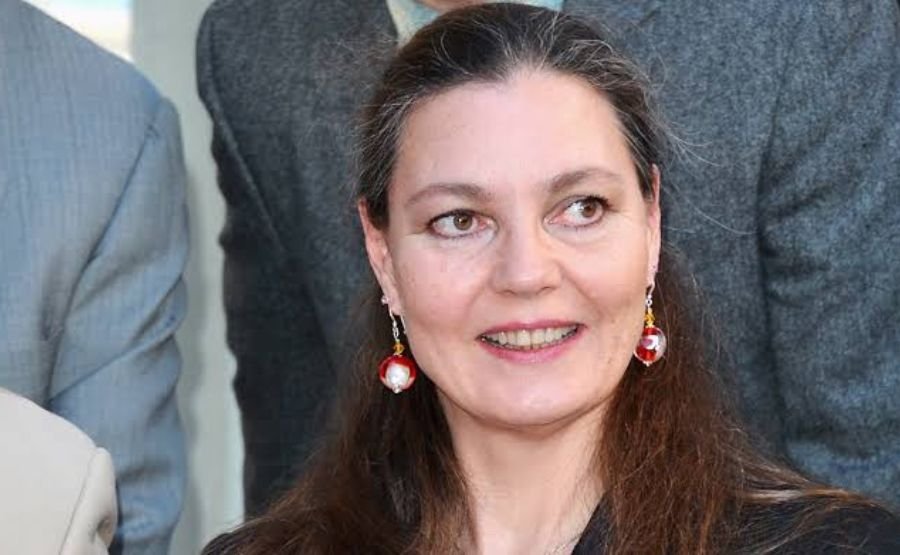
Maria Burton Carson: The Child Who Was Named on a Yacht Before She Could Walk
The official version of Maria Burton Carson goes like this: a sickly orphan from Munich found by one of the most famous women in the world, lifted into a glittering life, endured decades of surgeries, watched her parents destroy and reconstruct their marriage twice, and emerged intact — private, dignified, living quietly in Idaho. That’s not wrong. But it’s also the version that lets everyone feel good about the story, and I’ve spent enough time with the actual record to know the feeling-good version is always missing something.
Quick Bio
| Detail | Info |
| Full legal name | Maria Hélène Elisabeth Burton Carson |
| Born | Munich, Germany, 1961 (sources give January 8 or August 1 — date genuinely contested) |
| Adoption begun | By Eddie Fisher and Elizabeth Taylor in the early 1960s |
| Adoption completed | 1964, Richard Burton became legal father |
| Medical history | Congenital hip dysplasia; approximately 22 corrective surgeries |
| Career | Fashion designer; co-founded talent agency; philanthropist |
| First marriage | Daniel Steve Carson, February 13, 1981 — divorced 2000 |
| Daughter | Elizabeth “Eliza” Carson (born 1982) |
| Second marriage | Tom McKeown, 2001 — divorced |
| Son | Richard McKeown (born c. 2001) |
| Residence | Idaho, USA |
| Notable connection | Eliza Carson is ambassador for the Elizabeth Taylor AIDS Foundation |
A Child Adopted During Someone Else’s Scandal
Let’s start with something everyone knows but nobody says plainly: Elizabeth Taylor began adopting Maria Burton while she was married to Eddie Fisher and conducting the affair with Richard Burton that the Vatican literally condemned in a formal statement. The year was 1961 or 1962. Taylor was the most photographed woman on earth, filming Cleopatra in Rome, reportedly hospitalised twice during production, in the middle of the most tabloid-saturated romance of the century, and she started the paperwork on a German orphan with serious medical needs.
You can read this two ways. You can read it as evidence of Taylor’s genuine maternal instinct — a woman who, in the middle of spectacular personal upheaval, looked at a baby with hip dysplasia in a Munich orphanage and said yes. That’s real. The love was real, by every account. But you can also read it as something more complicated: an adoption that began under one husband, got abandoned when that marriage collapsed, and was completed by a different husband as part of building the domestic legitimacy the Taylor-Burton union desperately needed. Maria wasn’t just adopted. She was adopted into a situation.
I’m not saying Taylor didn’t love her. I’m saying the circumstances of that adoption tell you more about how 1960s celebrity operated than any fan biography will admit.
See also “Charles Anthony Vandross: The Man Whose Whole Life Got Swallowed by His Brother’s Mythology“
The Name on the Yacht
Here’s the detail that always gets me. Richard Burton bought a 165-foot Edwardian motor yacht in 1967 as a gift for Taylor. He named it Kalizma — an acronym from the first two letters of their daughters’ names: Kate, Liza, Maria. Kate was Burton’s biological daughter from his first marriage to Sybil Williams. Liza was Taylor’s daughter with producer Mike Todd. Maria was the adopted German orphan who had spent her first years in and out of surgical suites.
Burton also signed a yacht with her name. Alongside his biological daughter. Without a footnote, without a distinction. That’s not nothing. In the diaries Burton kept obsessively throughout his first marriage to Taylor — later published by Yale University Press in 2012 — he wrote about his children with warmth that biographers describe as genuine and consistent. He saved the letters and drawings they sent him. He remained present in Maria’s life. When he died in August 1984, four days after Maria’s 23rd birthday, he left her ten percent of his British estate in his will. The Los Angeles Times reported on this in 1985. That’s a legal and financial commitment made years after the Taylor-Burton second divorce in 1976, years after the professional relationship had effectively dissolved.
Whatever else was complicated about Richard Burton — and plenty was — he didn’t treat Maria as a prop or a footnote. That matters, and it gets swamped by the Taylor mythology.

Twenty-Two Surgeries and the Problem of Gratitude
Look, I want to talk about what it actually means to be a small child with congenital hip dysplasia who undergoes approximately twenty-two corrective surgeries over the course of childhood and adolescence. The number varies by source — “nearly two dozen,” “more than twenty,” sometimes exactly twenty-two — but the reality underneath all those different counts is the same: this was a child who spent enormous amounts of time in hospitals, in recovery, in pain, in a body that wasn’t cooperating.
And all of this was happening inside one of the most photographed families on earth. Every school year photo, every public appearance, every moment of Maria’s recovery happened in the context of her parents’ global celebrity. Taylor’s camp consistently presented this as a heroic narrative — Taylor using her wealth and connections to give Maria the surgeries she couldn’t have had otherwise. That’s accurate. It’s also the kind of narrative that makes it very hard for the person at its center to say anything complicated about their own experience, because any ambivalence sounds like ingratitude toward the woman who got you out of an orphanage and paid for two decades of medical care.
The gratitude trap is real. The popular version of Maria’s story requires her to be permanently grateful, permanently private, permanently dignified. And she has largely complied with that version. But you can be genuinely grateful and also have a complicated inner life about being adopted into a circus. Those two things are not mutually exclusive.
The Marriage Years Nobody Examines
She married Daniel Steve Carson on February 13, 1981, in New York City. She was nineteen or twenty years old. They had a daughter, Eliza, in 1982, naming her after Elizabeth Taylor — which is either a beautiful gesture of gratitude or the kind of naming choice that tells you something about how thoroughly the adoptive mother occupied the psychological landscape of this family.
The marriage lasted nineteen years. They also co-founded a talent agency together. At some point, things fell apart — various sources describe the divorce as difficult, without specifying much. What does get mentioned, in the more detailed accounts, is that at some point Maria moved their daughter to Los Angeles covertly, to be near Elizabeth Taylor, while Carson was in New York. He filed a lawsuit. He also filed a report alleging financial misconduct — specifically, that $7,000 had gone missing from a joint account.
These allegations were never publicly resolved and appear in only some accounts. They are worth noting not because they establish guilt but because they complicate the narrative. The first ex-husband’s core accusation — that Maria used her mother’s connections and name to gain advantage in legal disputes — is exactly the accusation that the second ex-husband would later make independently.
She married Tom McKeown in 2001. He’s described in one source as a teacher. They had a son, Richard, named after Richard Burton. By 2004, Maria had filed a restraining order against McKeown, alleging verbal and physical abuse toward herself and their son. McKeown denied the charges, claimed they were fabricated, and accused Maria of leveraging her famous mother’s connections and “powerful allies” to make the case stick.
Two Ex-Husbands, Same Accusation
Let me be direct about this because it doesn’t get the analytical attention it deserves. Two men, in two separate divorces separated by roughly two years, made the same specific accusation: that Maria Burton Carson weaponized her relationship to Elizabeth Taylor to gain legal and social advantages in domestic disputes. One said she moved their daughter to LA under the cover of Taylor’s household and networks. The other said Taylor’s influence was being used to stack the deck against him in court.
There are three possible interpretations. One: both men were abusive and reached for the same convenient explanation to deflect responsibility. Two: Maria actually used Taylor’s name and connections as leverage in both situations. Three: some blend of both — perhaps she did have resources and allies unavailable to most people, perhaps that’s just what it looks like when a wealthy woman with a famous mother navigates a difficult divorce.
I honestly don’t know which of them is accurate. The reporting is thin, unverified, and largely secondhand. But I am suspicious of the popular narrative that simply ignores both accusations entirely and presents Maria only as a passive victim. That’s not a neutral omission. It’s a choice that protects the Taylor family legacy at the cost of a more honest account.
Quiet, Yes — But On Whose Terms?
You hear this phrase over and over in every piece ever written about Maria Burton Carson: she “chose” privacy. She “deliberately” stepped away from Hollywood. She “built a quiet life.” And look, maybe that’s exactly right. Idaho is about as far from Bel Air as you can get while remaining in the continental United States. The fashion design career kept her away from cameras. The choice not to publish a memoir, give interviews, go on the television circuit that Taylor’s other children occasionally inhabited — these all look like deliberate decisions.
But I want to push on the word “chose” for a moment. How much choice does someone have when the alternative is being perpetually compared to a mother who was the most beautiful and photographed woman of her generation? How much choice does someone have when any public appearance will be mediated through that comparison, when any opinion expressed will be footnoted with “daughter of Elizabeth Taylor”? The privacy might be a choice. It might also be the only exit from a room with no other door.
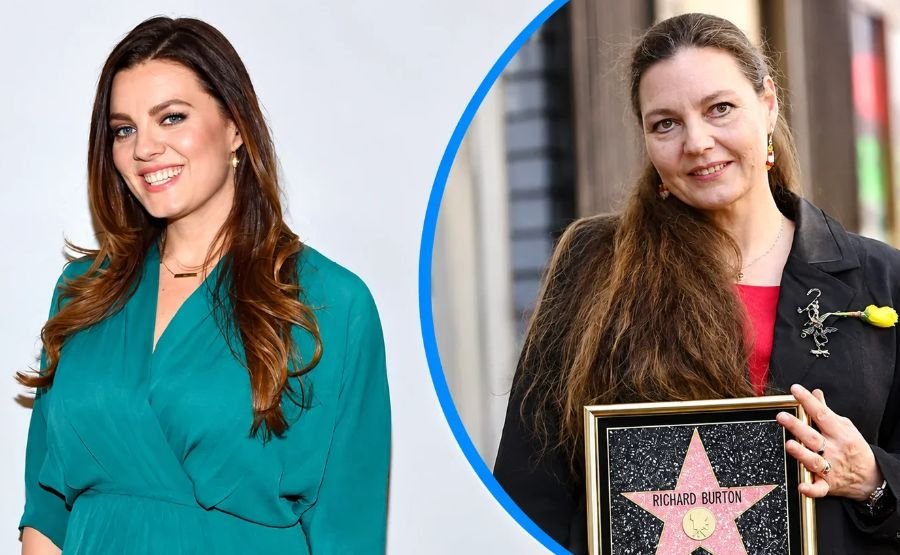
Her daughter Eliza has taken a slightly different path — serving as an ambassador for the Elizabeth Taylor AIDS Foundation, maintaining a public-facing presence connected to Taylor’s legacy. That’s the grandchild’s version of the same question Maria navigated: how do you have your own identity when the gravity of one person’s fame is this strong?
Richard Burton’s Death, and What She Lost
On August 5, 1984, Richard Burton passed away in Céligny, Switzerland. He was 58. The cause was a cerebral hemorrhage. Maria was 23, or had just turned 23 four days earlier depending on which birth date you use. She was no longer a child by any measure, and Burton had been out of daily family life since the second divorce from Taylor in 1976. But the diaries, the yacht name, the will — these all point to a man who kept his adopted daughter in his heart even as the marriage that defined his public life dissolved.
I think about what it means to lose the person who chose you as a legal parent when you were already someone else’s child. Burton didn’t have to adopt Maria. Taylor started the process with Eddie Fisher. Burton completed it, put her name on a yacht, wrote about her in his private journals, and left her money in his will. That is not a performance for the press. That is a private accounting of what you value.
And then he was gone, at 58, four days into her adulthood. The timeline has a cruelty to it.
See also “Charles Anthony Vandross: The Man Whose Whole Life Got Swallowed by His Brother’s Mythology“
Final Words
Here’s my honest read, after years of watching this story get flattened in both directions.
Maria Burton Carson is neither the pure victim of fame that the sympathetic coverage presents, nor the manipulative celebrity-adjacent operator that her ex-husbands implied. She is a woman who was handed an enormous amount of attention before she could consent to it, who endured a physically brutal childhood in one of the most visible families on earth, who made a career and a life at deliberate distance from the machinery that created her public existence, and who fought two difficult divorces that produced accusations she has never publicly addressed.
The adoption story is real and moving. The surgeries were real. The love from Taylor and Burton was real and documented. So was the complexity. So were the lawsuits. The popular version of her story gives you the first set of facts and skips the second, because the second makes Taylor’s legacy feel murkier and complicates the clean narrative of a rescued orphan finding grace.
She’s in Idaho. Her daughter works for the Foundation. Her son carries Richard Burton’s name. The yacht still exists, still chartered for weddings and corporate events, still carrying those three syllables: Ka-Li-Ma. That’s about all we reliably know, and it may be enough.
FAQs
1. Who is Maria Burton Carson?
She’s the adopted daughter of Elizabeth Taylor and Richard Burton, born in Munich in 1961 with a congenital hip condition. The adoption began under Taylor’s then-husband Eddie Fisher and was completed by Burton after he and Taylor married in 1964. She went on to become a fashion designer and philanthropist, lives in Idaho, and has two children.
2. When was Maria Burton Carson born?
Genuinely disputed. People and InStyle cite January 8, 1961. Most secondary sources use August 1, 1961. Even that basic fact is inconsistently recorded, which tells you something about how thin the actual primary documentation is.
3. How many surgeries did Maria Burton Carson have?
Approximately 22, spread across her childhood and adolescence, to treat congenital hip dysplasia. The number varies slightly by source but clusters around “nearly two dozen.” These were real medical interventions, not footnotes.
4. Why did Elizabeth Taylor adopt a child from Germany?
She encountered Maria at an orphanage in Munich. The adoption began around 1961–1962, while Taylor was still married to Eddie Fisher. When that marriage ended and Taylor married Burton in 1964, he completed the legal adoption, giving Maria the Burton surname.
5. What happened in Maria’s first marriage?
She married Daniel Steve Carson in 1981. They had daughter Eliza in 1982. After nineteen years, they divorced in 2000. During the split, Carson reportedly filed a lawsuit after Maria took their daughter to Elizabeth Taylor’s home in LA, and alleged a $7,000 discrepancy in a joint account. These claims were never publicly adjudicated.
6. What happened in Maria’s second marriage?
She married Tom McKeown in 2001 and had a son, Richard. By 2004 she had filed a restraining order against McKeown, alleging verbal and physical abuse. McKeown denied the charges and accused Maria of using her mother’s connections to build her case. This was the same accusation her first husband had made, independently.
7. What is the Kalizma connection?
Richard Burton bought a 165-foot yacht in 1967 as a gift for Elizabeth Taylor and named it Kalizma — combining the first two letters of their three daughters’ names: Kate, Liza, and Maria. That a man named Maria on a yacht worth hundreds of thousands of dollars, alongside his biological daughter, is the quietest and most revealing proof of his feelings about the adoption.
8. Did Richard Burton remember Maria in his will?
Yes. The Los Angeles Times reported in 1985 that Burton left Maria ten percent of his British estate — specifically money covered by an agreement he and Taylor had reached in 1973. He died in August 1984, four days after what was likely Maria’s 23rd birthday.
9. Did Maria inherit from Elizabeth Taylor?
Taylor placed her estate in a private trust, so exact figures were never publicly disclosed. As one of Taylor’s four children, Maria was among the named beneficiaries. The estate was estimated at around $600 million at the time of Taylor’s death in March 2011.
10. What does Eliza Carson do?
Maria’s daughter, Elizabeth “Eliza” Carson, is an ambassador for the Elizabeth Taylor AIDS Foundation. She maintains a public presence connected to her grandmother’s philanthropic legacy while her mother remains private. The pattern — one generation retreating, one re-engaging — is interesting.
11. Where is Maria Burton Carson now?
Idaho. She’s been reported there for years, working in fashion and design, out of the public eye. She doesn’t appear to have social media, doesn’t give interviews, and hasn’t published anything about her own life. She appears to have made the deliberate choice — or found the only available exit — and taken it.


2 Comments