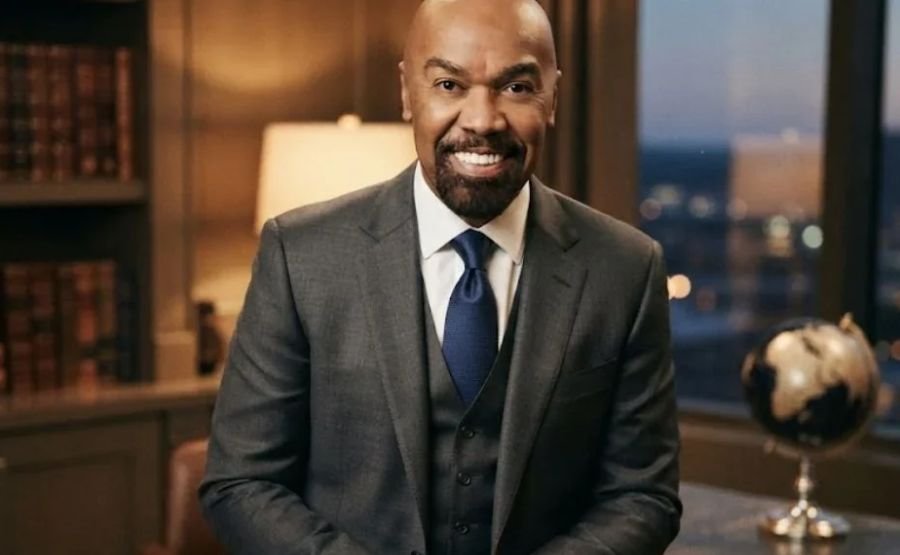
Walter Bridgforth Jr.: The Man the Story Never Quite Got Right
Quick Bio
| Detail | Info |
| Full Name | Walter Bridgforth Jr. |
| Born | Likely 1959 or 1966, Detroit, Michigan (sources conflict) |
| Occupation | IBM marketing executive; real estate developer; franchise entrepreneur |
| Married | Anita Baker, December 24, 1988 |
| Separated / Divorced | ~2005 / officially ~2007 |
| Children | Walter Baker Bridgforth (b. Jan 1993); Edward Carlton Bridgforth (b. May 1994) |
| Career Highlights | First national family-style restaurant in downtown Detroit in 25 years (IHOP, 1995); Baker Lane Estates development; Crain’s Detroit Business 40 Under 40, 1995 (#37) |
| Key Controversy | Royalty issue following divorce; Baker was threatened with jail in 2010 for not signing settlement papers |
The Quiet Man, or the Convenient One?
Let’s be honest about something from the jump. Walter Bridgforth Jr. is one of those figures who exists, for most people, as a footnote. He’s the ex-husband. He’s the man whose name you have to look up to remember. Articles mention him almost apologetically, as if the goal is to establish his existence and then quickly pivot back to the Grammy winner in the room.
But you can’t really understand the arc of his life — or certain chapters of hers — without taking him seriously on his own terms. And once you start doing that, you notice how slippery the record actually is. The internet has been extremely creative about Walter Bridgforth Jr.
There are AI-generated or low-effort websites describing him as a mid-century architect born in 1915, as a NexusTech co-founder pioneering digital infrastructure, and — my personal favorite — as a dentist. A dentist. The man was an IBM marketing executive who built a real estate portfolio in Detroit and opened the city’s first downtown national family-restaurant chain in a quarter century. That’s an actual, interesting story. Why is the internet inventing a different one?
See also “ASAKE BOMANI: What Gets Remembered When You Prop Up Someone Else’s Dream“
The Contradictions Start Early
You can’t even nail down when he was born. One source puts it at 1959, which would make him 36 during his Crain’s 40 Under 40 recognition in 1995 — plausible, and fitting the math of meeting Anita at a Detroit nightclub in 1986 as an IBM executive. Another source says 1966, which would have made him twenty years old when they met and barely old enough to be at the bar where, by Baker’s own admission, that meeting happened. She lied about it for years — “I told everyone I met him at a shoe store,” she said once, laughing. “But I lied. I met him at a bar.” That detail is charming. It’s also one of the only moments where the actual texture of who they were together bleeds through the press.
The marriage date doesn’t even hold still across sources. Most credible ones say December 24, 1988. One old Wikipedia cached version says Christmas Eve 1987. One breathtakingly wrong source says 1998 — a full decade off — and still gets republished. His birth year, his marriage year, even the number of his children: one site lists three kids, including a daughter named “Lauren Baker,” who appears to exist nowhere else in the record. Two sons. That is confirmed by court documents, by both parents, and by the sons’ own public presence. Lauren Baker does not exist.
Look, I’m not making this case to embarrass bad content farms. I’m making it because this kind of informational rot is what happens when someone decides to remain private, and the internet fills the vacuum with noise.

IBM, Then Independence
What we actually know is this. Before Anita Baker was famous, and during the period she was becoming famous, Walter Bridgforth Jr. had built his own professional identity in Detroit. He worked in marketing at IBM — a job that, in the 1980s especially, carried genuine prestige. This was not a man floating in her orbit without his own gravity. He came from a household rooted in music and ministry — his father reportedly a pastor, his mother teaching piano — and he moved into the corporate world with a clear head and a work ethic that Crain’s Detroit Business eventually recognized publicly.
By 1995, he had pivoted from IBM to entrepreneurship in a way that was specifically about Detroit. And this is where the story gets genuinely interesting, and where most coverage just skips ahead to the divorce drama.
The IHOP Nobody Talks About
In 1995, Bridgforth opened the first national family-style restaurant chain in downtown Detroit in twenty-five years. An IHOP on Jefferson Avenue. The New York Times, in the same year, called it “a sparkling novelty and symbol of hope.” That’s not nothing. That’s a businessman making the case that urban Detroit was an underserved market — a neglected one — at a time when most chains were running the other direction.
The restaurant became what Deadline Detroit later called a hotspot for Detroit’s power brokers. It played Motown. It displayed Anita Baker’s records and images. It was, in other words, both a genuine civic act and also clearly a vehicle for a man who was navigating his own fame-adjacency with some awareness.
Here’s the part that gets dropped from the flattering version of the story: the IHOP’s construction reportedly required the demolition of a historic house. It was locally controversial. The man who wanted to revitalize a neighborhood made a decision that cost the neighborhood something. That tension — the complexity between development and preservation — is exactly the kind of thing that gets smoothed out when someone is primarily covered as “Anita Baker’s husband.”
The restaurant closed in 2019. Bridgforth had long since moved on from ownership by then.
Baker Lane Estates and the Grammar of Ambition
He named a lakefront residential development after her. Baker Lane Estates — four exclusive lakefront lots in Grosse Pointe Farms, where he became the first African American to develop a residential complex. Think about that name for a second. It’s either a gesture of extraordinary devotion or a calculated brand move, or, honestly, both at the same time. It doesn’t have to be one thing.
He was also, during his Crain’s 40 Under 40 recognition in 1995, being described as someone with a clear belief in what he called neglected markets. Urban Detroit. Black Detroit. Places that the mainstream business infrastructure had written off. You can be cynical about that framing if you want, but the IHOP numbers backed the idea — it had the highest sales of any IHOP in the Midwest when it opened. He was right.
What I find interesting is that none of this — the franchise, the development, the civic argument — gets much space in any profile of him. It’s always background. It’s always preface to the marriage.

The Marriage and What We Don’t Know
They were together for nearly twenty years. Married on Christmas Eve 1988, separated around 2005, divorced officially somewhere between 2007 and 2008 depending on which source you trust. Their sons were born in 1993 and 1994, both during what should have been Baker’s commercial peak and her years of relative retreat from recording. Those years are ones she has been open about as marked by family, by intentional slowing down.
What we don’t know — and I want to stay honest about this — is what the marriage was actually like. Sources that claim Walter “helped with some of her more popular recordings” sit oddly against the fact that Baker’s creative team is extensively documented and his name doesn’t appear prominently in liner note credits or producer records in any way that’s independently verifiable in the sources I’ve found. One site claims he wrote “You Had It Easy” and co-wrote a Bill Withers song, which would be extraordinary if true and is completely uncorroborated. I’m not saying it’s false. I’m saying you should notice when a claim is that specific and that unverified.
What is documented is that the divorce, when it came, was not graceful.
The Royalty War and the Jail Threat
This is the part people remember. In 2010 — three-odd years after the divorce was finalized — the proceedings came back to life when Baker refused to sign documents authorizing a court-appointed music industry expert to seek royalty information from record companies. The divorce settlement had included a 50-50 split of royalties earned during the marriage. Bridgforth’s lawyer, Hanley Gurwin, said Baker “didn’t understand the documents and thought it wasn’t in her best interest to sign them.”
Chief Judge Pro Tem Lita Popke of Wayne County Circuit Court threatened Baker with jail. That’s not a tabloid exaggeration — the judge issued an actual warning, ordered Baker to attend a contempt hearing, and appointed Howard Hertz, a Detroit music industry expert, to sort through the royalty division. Baker appeared in court and spoke under oath about her anxiety. Eventually things were negotiated down. She avoided jail. An arrangement was made.
Here’s the thing about this moment that the sympathetic Baker coverage tends to soften: she had, by her own legal team’s admission, signed similar authorization letters immediately after the divorce. The fight in 2010 was specifically about newer letters that addressed “mechanical royalties” — royalties generated when older songs appeared on more recent “best of” compilations. Baker’s objection was that this territory wasn’t covered in the original negotiation. The judge actually expressed some sympathy for that narrow position. But the wider picture is that Bridgforth spent years trying to collect what a court had determined he was owed.
He stayed quiet through all of it. That’s notable. He didn’t give interviews. He didn’t go to the media. He let his lawyer speak and kept himself out of the coverage almost entirely.
The Timeline Gaps
Let me name what we genuinely don’t know, because I think the gaps matter.
We don’t know what Bridgforth was doing professionally between, roughly, the mid-2000s and now. The franchise period, the real estate period — those are documented through the late 1990s. After the separation, after the divorce, after the court battles: silence. No Bridgforth Foundation activity that I can trace with confidence. No business news. No updates. A man who was publicly recognizable enough to be on Crain’s 40 Under 40 in 1995 appears to have simply withdrawn.
That could mean he chose privacy. That could mean things didn’t go well. It could mean he built something entirely separate from anything that would connect back to the Baker name. I genuinely don’t know, and I’m not going to pretend the internet’s confident claims about his “$10 million net worth” or his ongoing “philanthropic work via the Bridgforth Foundation” are sourced to anything real. They’re not. They’re recycled from one another.
What the Contradictory Sources Actually Reveal
There are at least three versions of Walter Bridgforth Jr. circulating online that are almost entirely fictional. The mid-century architect born in 1915. The digital infrastructure visionary who co-founded NexusTech. The dentist. None of these are him. All of them are the result of AI content generation filling in gaps around a name without a Wikipedia page and a thin but real public record.
What’s revealing is what those inventions reach for. They all make him accomplished. They all give him a career that stands entirely on its own, independent of the famous ex-wife. Even the fake versions of him seem to understand, dimly, that the real story is one of a man whose identity keeps getting swallowed by someone else’s fame — and they’re, in their broken way, trying to correct for that.
That’s something. Even the noise is telling you something about the signal.
The Sons
Both Walter Baker Bridgforth and Edward Carlton Bridgforth went into music, which is either inevitable or ironic depending on how you look at it. Walter III has been described as a DJ and sound engineer. Edward kept a lower profile. Their parents, by all available accounts, remained committed co-parents through the legal drama and after it.
That’s genuinely decent. It’s easy to underrate.
See also “ASAKE BOMANI: What Gets Remembered When You Prop Up Someone Else’s Dream“
Final Words
I’ve been turning this story over for years now — not because it’s earth-shattering, but because it keeps resisting easy summary. Walter Bridgforth Jr. is a man who built something real in Detroit, who made a smart marriage that lasted twenty years and produced two sons, who then spent years fighting for money a court said he was owed, and who has been almost entirely absent from the record since. He was erased slowly, then quickly.
The version of him I believe in is this: he was ambitious in a way that was his own before he was famous-adjacent, he made at least one complicated development decision in Detroit that doesn’t survive the flattering lens, and he endured a messy, public divorce with more dignity than most people would manage. He also may have been erased partly by his own choice. That’s not tragic — that’s just a person choosing privacy over the alternative.
What I can’t shake is how the record kept getting softer on him, then faker, then just entirely made up. The real Walter Bridgforth Jr. — IBM executive, IHOP pioneer, real estate developer, divorced father — is more interesting than the dentist, the architect, and the NexusTech guy combined. He just doesn’t make for a clean story. And the internet hates that.
FAQs
1. Who is Walter Bridgforth Jr.?
He’s a Detroit-based businessman — former IBM marketing executive, real estate developer, franchise entrepreneur — best publicly known for his marriage to R&B singer Anita Baker from 1988 to roughly 2007.
2. What did Walter Bridgforth Jr. do for work?
He started at IBM in marketing, pivoted to entrepreneurship in the early 1990s, opened the first national family-restaurant chain in downtown Detroit in twenty-five years (an IHOP in 1995), and developed residential real estate in Grosse Pointe Farms, where he became the first African American to develop a residential complex.
3. What time did he first encounter Anita Baker?
1986, at a Detroit nightclub. Baker admitted years later she’d told people it was a shoe store. It was a bar. She was promoting Rapture.
4. When did they get married and divorced?
Married December 24, 1988. Separated around 2005. Divorce finalized circa 2007. Multiple sources say different years — 2007 and 2008 are both cited — and neither Baker nor Bridgforth clarified publicly.
5. What was the royalty dispute about?
As part of their divorce settlement, they agreed to split royalties earned during the marriage 50-50. By 2010, Bridgforth was still trying to collect, Baker was resisting signing authorization letters, and a Wayne County judge threatened her with jail. She ultimately cooperated.
6. Did Baker actually almost go to jail?
Almost, yes. A judge issued a contempt warning and ordered her to appear. She appeared, spoke under oath, and an arrangement was eventually reached with a court-appointed music industry expert handling the royalty analysis.
7. How many children do they have?
Two sons: Walter Baker Bridgforth, born January 1993, and Edward Carlton Bridgforth, born May 1994. Any source claiming three children or a daughter is wrong.
8. What was Baker Lane Estates?
A four-lot exclusive lakefront subdivision in Grosse Pointe Farms that Bridgforth developed and named after his then-wife. He was the first African American to develop a residential complex in that area.
9. Was he on Crain’s 40 Under 40?
Yes — 1995, ranked #37. He was recognized specifically for bringing national restaurant investment back to downtown Detroit and for his real estate development work.
10. What happened to the IHOP he opened?
It closed in September 2019. It had been one of Detroit’s power broker hangout spots for years, with the highest Midwest sales in the chain when it opened. A new franchise group had taken over by the time it closed.
11. Where is Walter Bridgforth Jr. now?
Genuinely unknown. He has maintained an extremely private profile since the divorce proceedings concluded. No verified recent business activity, no confirmed net worth, no public interviews. He appears to have chosen to simply not be found, which, frankly, is his right.
Explore ideas that enrich your mind with The Aura Magazine.



One Comment