Simon Luckinbill: The Weight of a Funny Name You Didn’t Choose
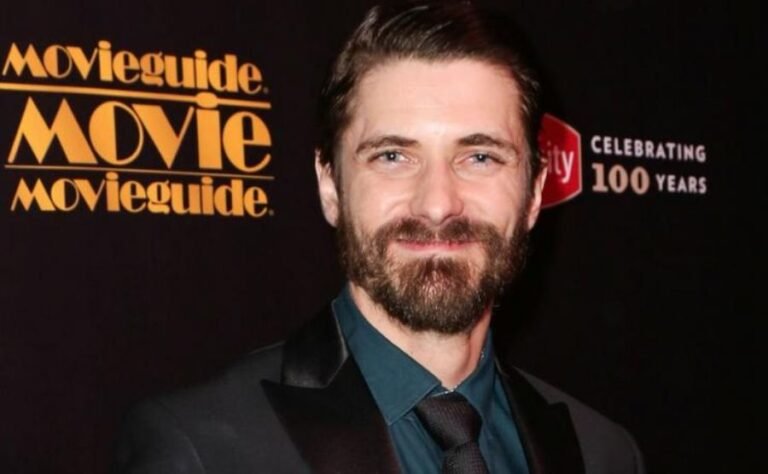
The first thing that happens when you search for Simon Luckinbill is that the internet tries to tell you who he is — and gets it wrong in a dozen specific ways. One site calls him an actor. Another makes him Lucie Arnaz’s husband. Several breathlessly describe him as the grandson of Lucille Ball while barely mentioning that his grandfather Desi Arnaz was just as foundational to the whole enterprise. And underneath all of that noise sits a real person: a painter, born in Los Angeles, raised in rural New York, working in acrylic on canvas in Palm Springs — who has quietly insisted on being himself for over forty years while the world kept trying to write a different story for him.
See also “Samuel David Hunt: The Kid in the Frame Who Decided to Build His Own“
Quick Bio
| Detail | Confirmed |
| Full Name | Simon Thomas Luckinbill |
| Date of Birth | December 10, 1980 |
| Birthplace | Los Angeles, California |
| Mother | Lucie Arnaz (actress, singer; b. July 17, 1951) |
| Father | Laurence Luckinbill (actor, writer; b. November 21, 1934) |
| Maternal Grandparents | Lucille Ball and Desi Arnaz |
| Siblings | Joseph Luckinbill (b. ~1982, musician); Katharine “Kate” Luckinbill (b. Jan. 11, 1985, actress); step-siblings Nicholas and Benjamin Luckinbill |
| Raised In | Katonah, New York (family relocated from LA, late 1980s) |
| Career | Visual artist; acrylic painter |
| First Major Show | Archangel Gallery, Palm Springs, 2014 |
| Notable Show | “The Show, Flea On A Hot Rock,” Gallery 500, Palm Springs, 2016 |
| Residence | Palm Springs, California |
| Inspirations | Christianity, music, vision quests, the natural world |
The Name Before the Person
Let’s be honest about what the name means before we talk about the man. Lucille Ball is not just a famous person — she’s a category. She’s the kind of famous that bends the information around it, the kind that makes it essentially impossible for anyone bearing a blood connection to her to simply exist in a Google search without being framed through that lens first. You are always, before you are anything else, Lucille Ball’s grandson. And that’s not a small thing to drag around.
Simon Luckinbill was born in 1980, the same year his parents married. His mother Lucie, who had spent her whole childhood performing on her parents’ show and in her family’s orbit, married actor and writer Laurence Luckinbill in June of that year. It was a moment of continuation — entertainment marrying entertainment, the dynasty seemingly rolling forward. But something different happened with this family, and Simon’s story is inseparable from that difference.
The Decision That Shaped Everything
There’s a quote from Laurence Luckinbill — Simon’s father — that I keep coming back to whenever I try to understand this family’s particular texture. Speaking about why they left Los Angeles for Katonah, New York, Laurence said: “We made a decision a long time ago to back off from big show business because of the children. We moved out of L.A. and went back to Katonah, New York, lived in the country away from the city and that had a huge effect on my movie presence. When you get out of position in the movie trade, you’re done.”
Read that again. A man who had originated roles on Broadway, starred in Star Trek V, appeared in Boys in the Band — by any measure a serious actor with serious credits — looked at his children and decided the career wasn’t worth it. He and Lucie both throttled their egos, in his words. They moved to the Hudson Valley. They put their kids in public school. They went to Unity Church. They made a home that was structurally different from the kind of Hollywood household that had produced Lucie herself.
This matters enormously for understanding Simon. You don’t come to acrylic painting and vision quests and a quiet life in the desert by accident when your grandmother is Lucille Ball. You come to it because someone deliberately took you out of the machine and let you grow in different soil.

Who Simon Actually Is
The most reliable glimpse into Simon Luckinbill’s interior life comes from a 2016 interview he gave to Coachella Valley Weekly, and even though it’s short, it tells you a lot. He said: “After studying music, drums, percussion, poetry, and nutrition, I found I had a passion for using color, texture, and a hint of fantasy to express myself.” He said his inspirations are music, nature, vision quests, and — explicitly, without embarrassment — God. He said: “I find art to be cathartic. I tell stories with my work. After all, art is about emotion. And my art is about me.”
Look at the range of that first sentence alone. Music, drums, percussion, poetry, nutrition. This is not the standard CV of a celebrity kid coasting on connections. This is someone genuinely casting around, trying things, following impulses that have nothing to do with Hollywood. The nutrition detail especially gets me — it’s a weird, specific, human detail that no content farm could have invented. It suggests a person who actually took their own interior life seriously enough to explore it in multiple directions before landing somewhere.
He landed at painting. And it took.
The 2014 Show: When the Work Proved Itself
The first major exhibition of Simon’s paintings happened in 2014 at the Archangel Gallery in Palm Springs. His entire family attended — Lucie, Laurence, his siblings. And more than half of his paintings sold within ninety minutes.
Let me sit with that for a second. Because the easy narrative here is that the gallery show sold because Lucille Ball’s family showed up, that the name moved the work. And maybe some of that is true — I’m not naive about how celebrity proximity functions in a gallery context. But half your paintings gone in ninety minutes is not name-recognition. That’s work that speaks. That’s color and texture and “a hint of fantasy” landing on people who didn’t come in asking for it.
The harder thing to square is that this kind of success happened with almost no media footprint. There’s no People profile from 2014 about Lucille Ball’s artistic grandson. There’s no Today Show segment, no puff piece in the Los Angeles Times. The 2016 show, titled “The Show, Flea On A Hot Rock,” got coverage in a local weekly. That’s the documentation of a successful art exhibition by someone who could have called in a hundred favors to get it featured more prominently, and who apparently didn’t.
The Siblings and the Structural Pattern
You can’t understand Simon without understanding the full sibling picture, because what happened to all three of Lucie and Laurence’s children is not random. It’s the product of a particular household philosophy.
Joseph Luckinbill — two years younger than Simon, also raised in Katonah — went to music college, graduated with a degree in music including jazz and classical guitar, became a musician and music teacher. Katherine “Kate” Luckinbill, the youngest, studied drama at the University of Miami, initially decided against entertainment after seeing the reality of it up close, then returned to it on her own terms at sixteen and built a real career in acting. She has spoken publicly about her grandmother Lucille Ball’s legacy with warmth and nuance. And then there are the two step-brothers, Nicholas and Benjamin, Laurence’s sons from his first marriage to Robin Strasser.
What you’re looking at here is a family that produced three creatives — a painter, a musician, an actress — none of whom went the obvious route, none of whom entered the industry through the front door of their grandmother’s brand. Kate joined Desilu Too, the family legacy company, but only after establishing herself as a performer first. That’s a consistent pattern. It’s the product of parents who, in Laurence’s own words, spent a lot of time throttling their own egos so their children could grow.
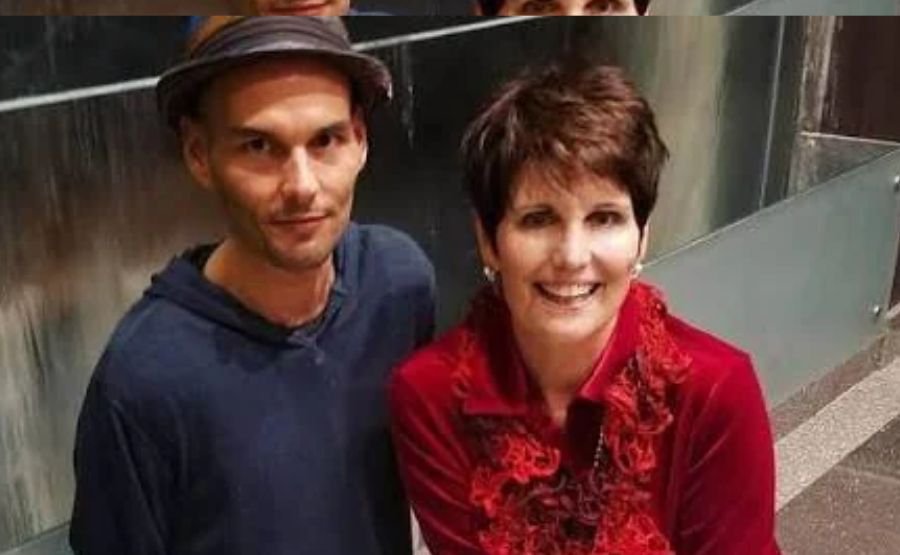
The Fake Articles and What They Reveal
Let’s be honest about something uncomfortable. The vast majority of what comes up when you search Simon Luckinbill’s name is fabricated. Genuinely fabricated — not exaggerated, not poorly researched, but structurally invented. Sites that describe him as an actor without naming a single credit. Articles that place his birth year in 1982 or simply leave it blank. Pages that describe a “rising star” with an “acting journey” and credits that don’t exist. One site, in a genuinely surreal moment, describes “Simon Luckinbill” as the man Lucie Arnaz is married to — conflating him with his own father.
What this tells you is that the name has enough search volume to make content farms money, but the person is private enough that there’s nothing real to scrape. So they invent. The gap between his famous last name and his quiet actual life is the exact shape that AI content mills fill with generic celebrity copy. And it’s not harmless. If someone who actually encountered his work at Gallery 500 tried to look him up and found seventeen conflicting fictional biographies, they’d be forgiven for giving up.
The real Simon Luckinbill is harder to find because he never made it easy to find him. That was a choice. I think it was the right one.
What the Grandparents Actually Cost
There’s a version of this story where the Lucille Ball connection is a gift — access, name recognition, automatic press. And that’s partially true. But you, if you’ve ever watched what happens to people born into mega-famous families, know that it also comes with a specific tax.
You are always being measured against something you had no part in creating. Every piece of work you make will be framed through the question of whether it honors or disappoints that legacy. Every gallery show carries the footnote. Every interview begins with the same sentence: “Simon is the grandson of Lucille Ball and Desi Arnaz.” His actual quotes — the ones about catharsis and emotion and his faith and vision quests — are always the second paragraph. Sometimes the third.
Lucille Ball died in 1989. Simon was eight years old. He grew up with a grandmother who was alive and present — she was at his parents’ wedding in 1980, she attended family events — but who died before he had any real relationship with her as an adult. The grandmother he knew was not the television icon. She was just someone in his family. And the television icon’s shadow has followed him into every gallery show and press mention regardless.
The Spirituality Nobody Knows What to Do With
Here’s a detail that gets almost no coverage: Simon Luckinbill is explicitly Christian, and his faith is a primary source of his artistic inspiration. He said so directly in the Coachella Valley Weekly interview, naming God alongside music and nature and vision quests as what drives his work. Vision quests, notably, are not standard Christian practice — they come from Native American tradition. So what you have is someone whose spiritual life is genuinely syncretic, who moves between traditions, who takes the inner life seriously enough to shape his art around it.
This complexity gets flattened in almost all the coverage into nothing. The AI articles never mention it. The celebrity-genealogy pieces skip it entirely. And yet it’s the most specific thing he has ever said about why he makes art. It’s the DNA of the work. Ignoring it because it doesn’t fit the “grandson of a famous comedian” frame is a form of erasure, even if it’s the bloodless kind.
The Age His Father Is Now
I want to say something about Laurence Luckinbill directly, because his age — 90 as of late 2025 — is relevant to Simon’s story in ways nobody’s writing about. The man who made the deliberate choice to leave Hollywood for his children, who admitted it cost him his film presence, who built a home in Katonah and later Palm Springs so Simon and Joseph and Kate could grow into themselves — he is 90 years old. The sacrifice he described with such clarity in that interview happened, was real, and its consequences — both the cost to his career and the product in his children — are now fully visible.
Simon is 44. He’s a working artist in the desert. His brother is a musician and music teacher. His sister is an actress who entered the business on her own terms. The experiment, if you want to call it that, worked. That’s not nothing.
Final Words
Simon Luckinbill is a 44-year-old painter living in Palm Springs whose first gallery show sold out before it was over, who gave his best interviews to a local weekly rather than a national outlet, whose inspirations include vision quests and God and the natural world, and whose grandmother’s face is on a postage stamp. Those things coexist in one person without canceling each other out.
What I feel, having spent time in his story, is something between admiration and genuine irritation on his behalf. The admiration is for the stubbornness of his choices — the sustained refusal to be the accessible version of himself that the internet and celebrity culture demand. The irritation is at the ecosystem that turned that refusal into an invitation to invent him wholesale, that couldn’t process the quiet so it generated noise instead.
The irony is that the real Simon is more interesting than the fictional one. A man who studied drums and nutrition and poetry before finding painting, who takes his faith seriously enough to name it, who had his entire family at his first gallery opening and sold half the room in ninety minutes, whose father gave up his movie career so his children could become themselves — that’s a story worth reading. It’s just not the story the internet knows how to tell.
FAQs
1. Who is Simon Luckinbill?
He’s the eldest son of actress Lucie Arnaz and actor-writer Laurence Luckinbill. Born December 10, 1980 in Los Angeles. He’s a visual artist — a painter — not an actor. The dozens of sites calling him an actor are fabricating.
2. Is Simon Luckinbill related to Lucille Ball?
Yes. Lucie Arnaz is his mother; Lucille Ball was Lucie’s mother, making Simon Lucille Ball’s grandson through the maternal line. Desi Arnaz is also his grandfather, which gets mentioned less often for no good reason.
3. Why did Simon Luckinbill choose art over acting?
His own explanation: after studying music, drums, percussion, poetry, and nutrition, he discovered that acrylic painting was where his real self-expression lived. His parents also deliberately raised their children outside the Hollywood machine, which made performing seem like less of an obvious default.
4. Where does Simon Luckinbill show his work?
His documented shows are both in Palm Springs — Archangel Gallery (2014, first major show) and Gallery 500 at The Five Hundred (2016, “The Show, Flea On A Hot Rock”). He’s said he’s shown at numerous venues around the country, though specific documentation beyond the Palm Springs shows is sparse.
5. What kind of art does Simon Luckinbill make?
Acrylic on canvas. Abstract and expressionistic, with dreamlike, emotionally evocative qualities. He describes his work as storytelling through color and emotion, drawing inspiration from faith, nature, vision quests, and music.
6. Where does Simon Luckinbill live?
Palm Springs, California, where his parents Lucie and Laurence also live. The family relocated from New York (Katonah and later Weston, Connecticut) around 2007.
7. Is Simon Luckinbill married?
Unknown. He has kept his personal life entirely private. No partner, spouse, or children have been publicly confirmed.
8. What does “Flea On A Hot Rock” mean as a show title?
He hasn’t elaborated publicly in any available source. It’s evocative — small, restless, precarious — but the specific meaning he attached to it is his to know.
9. Why does so much fake information exist about Simon Luckinbill?
Because his surname triggers high search volume (Lucille Ball connection) and his genuine profile is minimal enough that AI content mills fill the void with templates. The result is a wall of invented biographies that you have to push through to find anything real.
10. How successful was his 2014 Archangel Gallery show?
By all accounts, genuinely successful — more than half his paintings sold within ninety minutes of the opening. His entire family attended. This is documented in multiple sources including the Coachella Valley Weekly interview.
11. What is Simon Luckinbill’s relationship to the Lucille Ball legacy?
He is Lucille Ball’s grandson through Lucie Arnaz. He was eight when she died. He appears at family commemorative events occasionally. He does not, based on any available evidence, trade on the connection to advance his art career — which is notably countercultural given how easily he could.