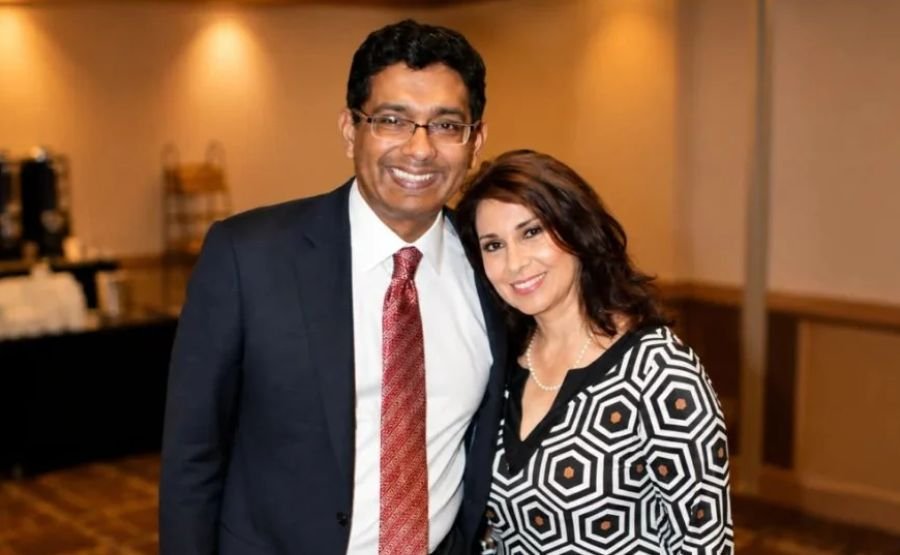
Dixie Brubaker: The Woman Who Got the Erasure Instead of the Story
Nobody talks about what it actually costs to be the wife behind the curtain. You hear about the careers, the books, the documentaries, the presidential pardons — the whole magnificent machinery of a public man’s self-invention. And somewhere in the fine print of that story, there’s a woman named Dixie Brubaker who spent twenty years making that machinery run quietly, invisibly, and on her own dime, in every sense of that phrase. The usual version of this story frames her as a footnote: the first wife, the one before things got interesting. Let’s be honest — things were always interesting. She just wasn’t the one allowed to narrate them.
Quick Bio
| Detail | Info |
| Full name | Dixie Rachel Brubaker |
| Birthplace | Louisiana, USA; raised in San Diego, California |
| Known role | Former wife of Dinesh D’Souza; White House intern, Office of Political Affairs; mother of Danielle D’Souza Gill |
| Marriage | May 1992 |
| Daughter | Danielle D’Souza Gill (b. 1995) |
| Separation | 2010, per D’Souza’s account |
| Divorce | 2012 |
| Key public act | Letter to U.S. District Judge Richard Berman, September 2014 |
| Religion | Evangelical Christian |
The Origin Story Nobody Told Right
You have to start in Washington. Not in the Washington of grand speeches and monuments, but in the mundane workday Washington of White House intern desks and policy memos and people who genuinely believed they were building something. Dixie Brubaker was working in the White House Office of Political Affairs during the late Reagan years — a conservative California girl, evangelical, presumably sharp enough to land that appointment — when she met Dinesh D’Souza, who was functioning as a domestic policy analyst in the same administration. He was already courting the version of America he wanted to live in.
Vanity Fair later published a quote from D’Souza that he credited as motivation: it was, he said, his “mission to marry the all-American girl.” He found her. The phrase sounds sweet if you don’t think about it too hard. Think about it for a second, though, and you realize: that’s not how you describe falling in love with a person. That’s how you describe completing a checklist. Whether Dixie knew she was being cast rather than courted is something only she knows.
They married in May 1992. She was in graduate school at the time. California. Conservative. Evangelical. The kind of life that looked, from the outside, exactly like what D’Souza always said he believed in.
See also “SHERRY AON: The Person the Internet Decided to Invent“
Two Decades of Making It Work
Look, I’m not going to pretend I have a window into what their marriage was actually like. Nobody does — certainly not the journalists who spent 2012 frantically Googling her. What we can piece together is a picture of a woman who oriented her life around a man who was perpetually ascending. D’Souza’s career moved in one direction: up, louder, more visible. Books. Think tanks. The Hoover Institution. The American Enterprise Institute. The lecture circuit. The kind of profile that required a stable domestic base while he moved through conservative intellectual circles.
Dixie reportedly attended Calvary Chapel in San Diego with D’Souza for about ten years. And here’s something the press consistently glanced past: there’s real reporting suggesting it was Dixie — the evangelical wife — who was partly responsible for D’Souza shifting his religious identity from mostly-Catholic to mostly-evangelical. The Christianity Today piece announcing his 2010 King’s College appointment noted that “D’Souza’s wife, Dixie, is an evangelical, and the family has attended Calvary Chapel.” So the evangelical credibility he was trading on to land a Christian college presidency? She helped build that. The irony of what came next needs no embellishment.
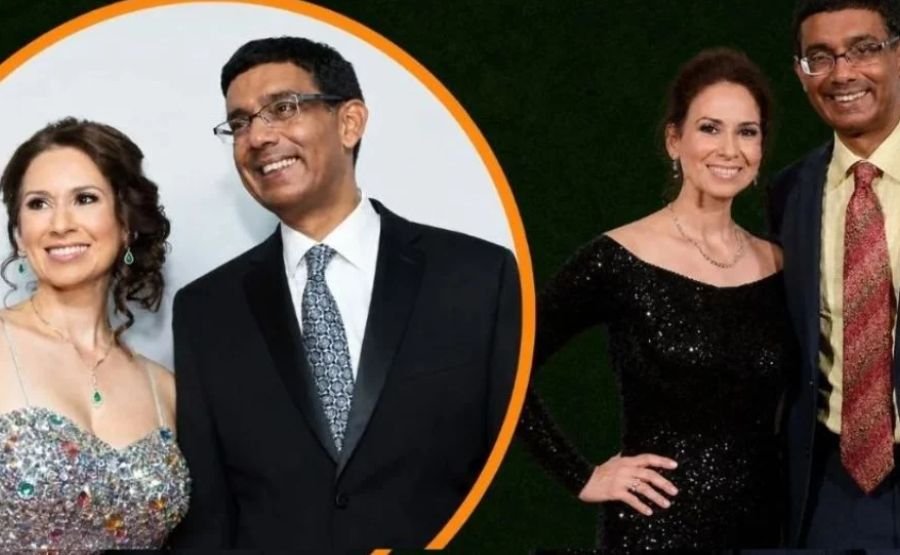
The King’s College Rupture
In August 2010, Dinesh D’Souza accepted the presidency of The King’s College — a Christian evangelical institution housed in the Empire State Building in New York City. He moved to New York. Dixie stayed in California. This is the part where the official timelines start to diverge in ways that should make you uncomfortable.
D’Souza’s own public defense — posted to his website and Fox News in October 2012 — stated plainly: “My wife Dixie and I have been separated for two years. Dixie approached me and demanded this before I came to King’s College to become its president in late August 2010.” He told interviewers he had informed the King’s College board chairman of the marital trouble at the time. Let’s be honest about what this claim is doing. It’s framing Dixie as the one who ended things, before any of the public embarrassment, which conveniently makes him a man separated from his wife rather than a man cheating on his wife.
But here’s what California court records actually show: D’Souza filed for divorce on October 4, 2012 — just twelve days before the World magazine article broke publicly on October 16. He did not file for divorce in 2010. He did not file for divorce in 2011. He did not file for divorce in any of the two years he claims the marriage was effectively over. He filed on October 4, 2012, and the article about him introducing another woman as his fiancée at a Christian values conference ran twelve days later. You can draw your own conclusions about the sequencing.
The Conference in Spartanburg
The actual triggering event is, when you lay it out plainly, remarkable in its audacity. In late September 2012, D’Souza gave a keynote address at the Truth for a New Generation conference in Spartanburg, South Carolina — a conference dedicated, genuinely, to Christian apologetics and living with moral integrity. He brought a woman named Denise Odie Joseph II, who was also still legally married to someone else. He introduced her to multiple attendees — including event organizer Alex McFarland — as his fiancée.
When McFarland confronted him, D’Souza reportedly said “nothing happened.” When World magazine broke the story, D’Souza called it “pure libel worthy of Christian condemnation” and accused the publication of mounting a vendetta against him. He then issued a statement saying he and Denise had decided to “suspend” their engagement to avoid even the “appearance of impropriety.” Suspend. Not end. Not apologize for. Suspend, like it was a business arrangement that needed better timing.
Dixie didn’t appear on television. She didn’t call a press conference. She didn’t post anything. She was, at that point in the story, still voiceless in the official record.
The Blame Reversal
What happened next is the part that stays with you. Once the scandal broke and D’Souza needed to recalibrate the narrative, he went on offense against Dixie. He told interviewers that he had discovered “irrefutable evidence” that Dixie had been involved with another man. He said she had been the one who asked for the divorce. He said she had grown bored of his political life and had shown no interest in saving the marriage. This is a very specific kind of move — and it works best when the other party is silent, which Dixie was.
Except she wasn’t entirely silent. In what reporting exists, she did push back. She said she had attended marriage counseling sessions. She said she had signed up for marriage retreat programs. She said D’Souza’s characterization of events was “simply untrue.” These aren’t the words of a woman who had checked out of a marriage. These are the words of a woman who tried to hold something together while her husband was positioning himself publicly as a defender of the institution of marriage itself. He was, at the time, literally writing and speaking about the importance of traditional American values.
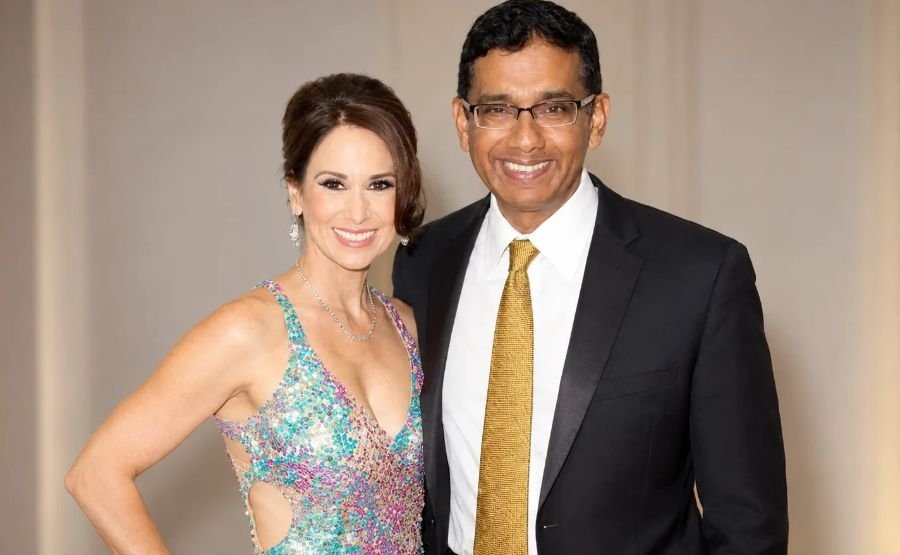
The Letter That Said Everything
In September 2014, Dinesh D’Souza was in federal court facing sentencing on a felony campaign finance charge. He had pleaded guilty to using straw donors to illegally contribute $20,000 to the 2012 Senate campaign of New York Republican Wendy Long. His legal team submitted a package of character witness letters, including one from their daughter Danielle, then nineteen years old, speaking to his integrity and good character.
The day before sentencing, Dixie Brubaker submitted her own letter to U.S. District Judge Richard Berman. Five pages. Into the public record.
This is the only time in this entire story that Dixie Brubaker spoke in her own voice, and she used it with precision. She alleged D’Souza had physically abused her in April 2012 — describing him as a trained martial artist who kicked her in the head and shoulder. She alleged the injuries continued to affect her physically. She addressed the campaign finance case directly, noting that a $10,000 contribution had been made in her name without her consent — the very crime for which he was being sentenced. She called him “not a truthful person.” She said he had lied to her, lied to the government, and encouraged others to lie for him.
And then — perhaps the most devastating line — she addressed Danielle’s letter. She said her daughter had been “allowed, and perhaps encouraged” to submit statements to a federal court that her father knew were “patently false.” That’s a mother, in a legal document, saying she believes her ex-husband used their teenage daughter to mislead a judge. D’Souza’s lawyer dismissed the letter as “completely baseless.” Nobody engaged with the substance.
The judge sentenced D’Souza to five years’ probation, eight months of community confinement, and a $30,000 fine. Not prison. Four years later, Donald Trump issued him a full pardon.
What the Timeline Actually Suggests
Let me back up and lay this out plainly, because the chronology matters and most of the coverage has been too busy chasing D’Souza’s narrative to notice:
In 2010, D’Souza moved to New York to lead an evangelical college. He claims Dixie demanded the separation before he left. No divorce papers are filed.
In late 2010, Vanity Fair later reports, D’Souza says he discovered “irrefutable evidence” of Dixie’s involvement with someone else. He does not file for divorce.
Through 2011 and into 2012, the marriage remains legally intact. He is the president of a Christian college. He is a public defender of traditional marriage and American values. No divorce is filed.
In September 2012, he takes Denise Joseph to Spartanburg and introduces her as his fiancée — to people at a Christian apologetics conference.
On October 4, 2012, he files for divorce.
On October 16, 2012, World magazine publishes its story.
On October 18, 2012, D’Souza resigns as president of The King’s College.
You look at that timeline and you have to ask: if Dixie had truly demanded the separation in 2010 and if D’Souza had discovered “irrefutable” evidence of her unfaithfulness the same year, why did it take until October 4, 2012 — twelve days before a magazine story — to actually file? The chronology doesn’t support the story he told. What it supports is a different story: a man who waited until he had to act, then acted, then shaped the narrative to minimize his culpability while maximizing hers.
The Quiet After
After 2014, Dixie Brubaker disappears from the public record again. And you can read this two ways. You can read it as a woman who had said what she needed to say and was done. Or you can read it as a woman who understood that engaging further with the D’Souza media machine — which by 2014 was producing successful documentary films and had the ear of an incoming Republican administration — was simply a battle with no upside for her. I think it’s mostly the second thing, though I have no way to be sure.
Danielle D’Souza Gill, their daughter, has become a conservative commentator and author in her own right. She wrote God, Faith, and Reason (effectively a collaboration with her father). She has appeared on conservative media. She credits her father extensively. There is no public account of what her relationship with her mother looks like now, or what she thinks of that 2014 letter. That silence is its own kind of data point.
D’Souza married Deborah Fancher in March 2016. He received a full presidential pardon in May 2018.
Contradictions That Deserve More Air
Three things sit awkwardly in this story and don’t get nearly enough attention.
First: D’Souza positioned himself throughout the 2000s as a defender of traditional marriage and Judeo-Christian family values. He wrote about it. He gave speeches about it at places like the conference where he brought his fiancée while still legally married. The word “hypocrisy” feels inadequate here because the gap between the public position and the private behavior was so total.
Second: The New Republic, reporting on the King’s College saga in 2012, noted that before marrying Dixie, D’Souza had been romantically linked to Ann Coulter and Laura Ingraham — other prominent conservative figures. The framing of Dixie as the “all-American girl” he’d been seeking takes on different weight when you understand the social world he was moving through. She wasn’t just his wife. She was also, in some sense, a credential.
Third: The campaign finance crime for which D’Souza was convicted involved making illegal contributions in other people’s names — including Dixie’s. She called this out in her sentencing letter. The man who was literally convicted of using other people’s identities without their knowledge then had his ex-wife publicly allege that he used her name without her consent in the very illegal act for which he was charged. This detail has essentially never been examined by anyone covering either the divorce or the conviction.
Final Words
Here’s my personal read, for what it’s worth. Dixie Brubaker is not a tragic figure, and I don’t think she’d want you to see her that way. She’s a private person who made a twenty-year bet on a man who turned out to be something different from the person she thought she’d married. That happens. What makes her story different is the sheer density of the institutional machinery that ran over her — conservative media, the Republican political world, a legal system that ultimately pardoned her ex-husband, and a daughter who chose her father’s story over her mother’s.
She got one shot to speak on the record — five pages to a federal judge — and she used it to call her ex-husband a liar and describe being kicked in the head. That took something. The fact that D’Souza’s team immediately dismissed it as baseless, and that most of the press coverage moved on in forty-eight hours, says less about whether she was telling the truth and more about whose story gets taken seriously in American public life.
She’s a grandmother now. She’s gone quiet in a way that reads, to me, as chosen rather than resigned. And somewhere in that choice, I think, is the clearest statement she’s ever made about the world she was in.
FAQs
1. Who is Dixie Brubaker?
She’s a private American woman who was married to conservative author and political commentator Dinesh D’Souza from 1992 to 2012. She worked as an intern in the White House Office of Political Affairs during the Reagan administration, attended graduate school when they married, and largely stayed out of public life. Her one notable public act was a 2014 letter to a federal judge that most outlets covered for a day and then forgot.
2. Why did Dixie Brubaker and Dinesh D’Souza divorce?
The legal divorce happened in 2012. The real answer is more layered. D’Souza says she demanded a separation in 2010 and was unfaithful. She says she tried to save the marriage through counseling and his claims were untrue. What the court records show is that he filed for divorce twelve days before a magazine article revealed he’d been calling another woman his fiancée at a Christian conference. Make of that what you will.
3. Did Dixie Brubaker write a letter to a federal judge?
Yes. In September 2014, the day before D’Souza’s sentencing for federal campaign finance fraud, she submitted a five-page letter to U.S. District Judge Richard Berman. She alleged physical abuse, said her name had been used without consent in the crime he was being sentenced for, and called D’Souza “not a truthful person.” His lawyer called it baseless. The judge sentenced D’Souza to probation and community confinement.
4. What abuse did Dixie Brubaker allege?
Her letter alleged D’Souza kicked her in the head and shoulder in April 2012 — noting he was a trained martial artist — and that the injuries continued to affect her. These are allegations she made in a legal document; they were disputed by D’Souza and were never adjudicated as judicial findings.
5. Where is Dixie Brubaker now?
She’s maintained a private life since the divorce. No confirmed public appearances, no interviews, no social media presence. She’s reportedly a grandmother — Danielle D’Souza Gill has a child named Marigold. That’s essentially all that’s on the record.
6. Did Dixie Brubaker remarry?
No credible reporting confirms this. The only thing we know for certain is that she hasn’t sought the spotlight. Whether she remarried privately is her own business and hasn’t been made public.
7. What was D’Souza’s relationship with Denise Odie Joseph?
D’Souza introduced Denise Joseph — who was also still legally married to someone else — as his fiancée at a Christian apologetics conference in Spartanburg, South Carolina in September 2012. He said they’d known each other three months, denied sharing a hotel room (others present said otherwise), and later said he “suspended” the engagement. She largely disappears from public reporting after the immediate scandal.
8. Was Dixie Brubaker involved in D’Souza’s campaign finance crime?
According to Dixie’s own letter to the judge, her name was used without her knowledge or consent in the illegal contributions for which D’Souza was convicted. D’Souza used straw donors to funnel $20,000 to Wendy Long’s 2012 Senate campaign. The specifics of what role, if any, Dixie’s name played in the scheme is one of the details that got lost in broader coverage.
9. What did Danielle D’Souza Gill say at her father’s sentencing?
She submitted a character witness letter on his behalf, speaking to his good character. Dixie’s sentencing letter directly addressed this, stating that Danielle had been “allowed, and perhaps encouraged” to submit statements that D’Souza knew were “patently false.” Danielle was nineteen at the time. Their public relationship appears close and ongoing.
10. What was D’Souza’s Trump pardon about?
Trump pardoned D’Souza in May 2018, calling him a “victim of selective prosecution.” D’Souza had pleaded guilty in 2014 to making illegal campaign contributions in other people’s names, using straw donors to get $20,000 to a Republican Senate candidate in 2012. He was sentenced to five years’ probation and eight months of community confinement. The pardon erased the felony conviction.
11. Why does Dixie Brubaker stay so private?
You’d have to ask her, and she’s not answering. But look at the landscape she was exiting: a powerful media figure with a devoted ideological following, a daughter who went into the same public arena, a movement that rewards loyalty and punishes dissent. The rational move, if you have no desire to become a character in someone else’s story, is the one she made. She said what she had to say to a federal judge. Then she stopped. That’s not weakness. That’s a decision.




One Comment