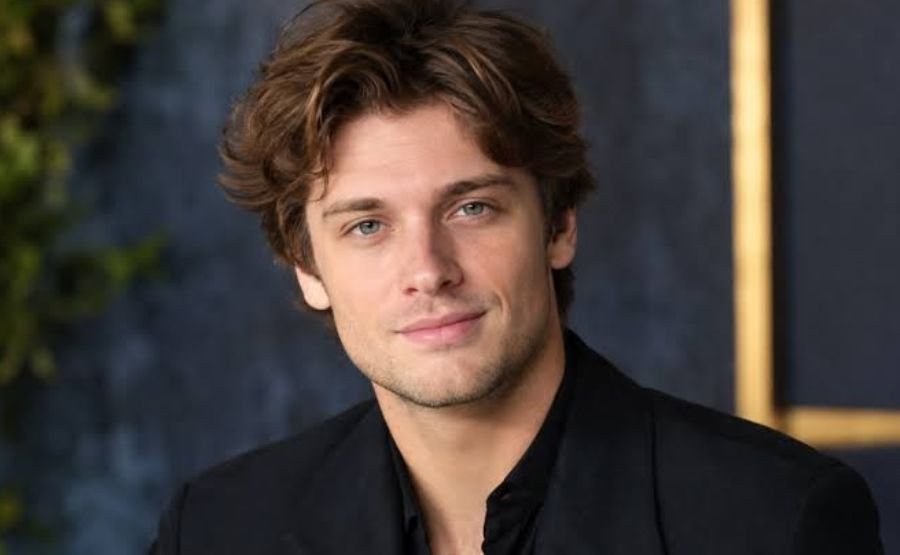
BLAKE ANDERSON HANLEY: The Man Who Keeps Getting Filed Under Someone Else’s Story
Most people reading his name right now are here because of a woman. Let’s just say that out loud. You typed “Emily Wickersham’s ex-husband” or some variation of it, and the algorithm handed you Blake Anderson Hanley. That’s not nothing — that’s actually the whole problem with how this particular story gets told.
Quick Bio
| Detail | Verified Info |
| Full name | Blake Anderson Hanley |
| Born | March 2, 1984, Palm Beach, Florida |
| Father | Daniel Hanley (athlete, Essendon Football Club, VFL) |
| Brother | Drew Hanley (attorney, Legal Aid PBC) |
| Music project | Ghost Lion (formerly Kin Cayo) |
| Key EP | Junk Food For Thoughts (2011); Dim Echo (2016) |
| Marriage | Emily Wickersham, November 23, 2010, Little Palm Island, FL Keys |
| Divorce | December 2018 |
| Florida Bar admission | May 23, 2018 |
| Second marriage | Mumbi O’Brien (visual artist/costume designer) |
| Child | Daughter Muoni, born May 2020 |
| Legal work | Legal Aid Society of Palm Beach County, Heirs’ Property Project |
The Label That Stuck
Here’s the thing about Blake Hanley. He has spent roughly a decade being summarized in two clauses: musician and Emily Wickersham’s ex-husband. And those two facts sit in every article about him like they’re equal in weight, which they are not. One is something he built. The other is something that happened to him. The internet collapsed that distinction a long time ago, and he has never really fought his way out from under it.
Look, I’m not pretending to be neutral here. I’ve watched the coverage of this guy drift from vague curiosity to cottage-industry content farming, and something about that bothers me in a way I haven’t fully made sense of. Dozens of sites have published essentially the same article — same “Quick Bio” table, same bullet points, same admiring tone about his “dual career” — and almost none of them contain anything you could call original reporting. It’s a copy machine running on celebrity adjacency.
See also “Rebecca Liddicoat: The Story That Was Always Bigger Than the Divorce“
South Florida as Identity, Not Just Background
You have to understand where Blake Hanley comes from to understand why his music sounds the way it does and why he keeps circling back to that geography even after leaving it. Palm Beach, Florida is not the most obvious place to develop a genuinely restless artistic sensibility. It’s wealthy, it’s manicured, it’s the kind of place where the culture is mostly borrowed from somewhere colder and more serious.
And yet Hanley kept pointing back to it. His early project — which he ran under the name Kin Cayo before it became Ghost Lion — described its sound as “subtropical world-pop,” and the Sonicbids write-ups from that period called it “tropical post-punk.” That’s a real description, not a marketing gimmick. There’s a calypso undertow in Ghost Lion’s early work, a nylon acoustic guitar darkness that doesn’t quite fit with any obvious scene. He wasn’t trying to sound like Brooklyn. He wasn’t trying to sound like the indie darlings everyone was imitating in 2011. That’s actually more interesting than he gets credit for.
His father Daniel Hanley, depending on which source you trust — and you should be careful here because the sources do not agree — was either an athlete who played Australian rules football for the Essendon Football Club in the VFL, or a sports journalist. One detail gives you a man with deep athletic roots in a different country’s sporting culture. The other gives you something more ordinary. I lean toward the football player version because it has a specific detail that’s hard to fabricate — the Essendon Football Club is a real team with verifiable historical rosters — but I’ll admit I can’t personally confirm it. This is one of the places where the Blake Hanley record has a crack in it.
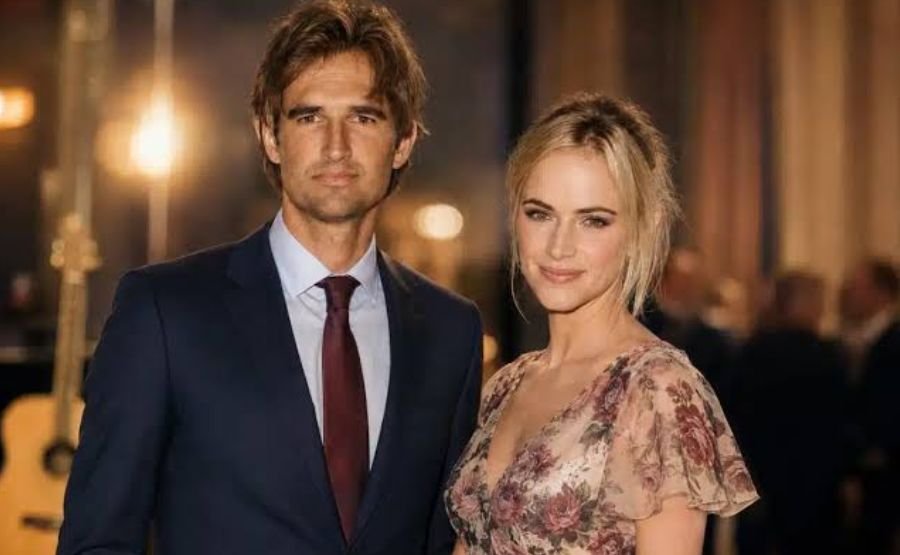
The Band’s First Life: A Quiet, Interesting Failure
Here’s something that almost nobody who writes about Hanley pauses on. Ghost Lion, or Kin Cayo as it was still called in some early form, had a real EP in 2011. Junk Food For Thoughts. It got small coverage in the indie press of the time, nothing to make someone famous but enough to suggest the project was generating genuine attention in local New York circles. And multiple sources from that period mention, almost in passing, that a debut LP was scheduled for “early 2012.”
That LP never seems to have come out. Or at least no one has documented it. The next verifiable Ghost Lion release I can find is the 2016 EP, Dim Echo, which reintroduced the project under its new name after the Kin Cayo phase. That’s a four-year gap, roughly 2012 to 2016, during which a marriage was happening, Emily Wickersham’s career on NCIS was accelerating, and the band appears to have been in some kind of suspended state.
Let’s be honest about what that gap probably means. It probably means the music got harder to prioritize. It probably means living in the orbit of someone else’s rising public life — and a career as specific and schedule-dominated as an actor on a network procedural — doesn’t exactly make it easy to book shows, record albums, and maintain band momentum. That’s not a criticism of either of them. It’s just what a four-year silence in the documented record looks like when you think about it clearly.
The 2016 Return and the Name Change
When Ghost Lion resurfaced in 2016 with Dim Echo, the band had transformed in a couple of ways that matter. The Kin Cayo name was gone — the band had rebranded fully to Ghost Lion, the name from the earlier New York incarnation. The duo (Hanley and Enrique Lara on drums and congas) had expanded to a four-piece, adding Mike Torres on bass and Chris Kapica on keys and synths. The sound shifted toward something more polished — a site called Atwood Magazine premiered the single “Shot the Sun Down” and described the project warmly, comparing it to The Mowgli’s, COIN, Walk the Moon. Good company. Not life-changing, but real.
You can find this material if you look for it. That’s the thing. The music exists. The recordings are real. There’s a 2011 write-up that called it a “dark mix of calypso beats, nylon acoustic guitars and a Clash-like attack.” That’s a description worth something. It tells you the artist was swinging for something specific. But in every article that profiles Hanley now, the music gets a paragraph, maybe two, and then the divorce gets four. I find that ratio telling, and a little infuriating.
The Marriage: What We Actually Know vs. What Gets Repeated
Here’s where I have to be careful, because there’s a version of this section that turns gossipy and a version that tries to be honest. I want the latter.
Blake Hanley and Emily Wickersham married on November 23, 2010, at Little Palm Island in the Florida Keys. Four days later, they held a reception at the Palm Beach Bath & Tennis Club. Both are confirmed by social notices and multiple sources. They were together for eight years before filing for divorce, finalized in December 2018. No children during the marriage. No public statement from either of them about why.
That’s it. That’s what we know.
What you’ll find if you dig into the content-farm coverage is this elaboration: “throughout their eight years of marriage, Blake Anderson Hanley and Emily Wickersham had a happy and loving marriage.” That’s not information. That’s filler. It sounds like something written by a bot that had to fill a paragraph before the next subheading.
What I notice is the timing. Hanley was admitted to the Florida Bar on May 23, 2018. His divorce was finalized in December 2018. These two events happen in the same calendar year. Make of that what you will. It could be coincidence. It could be that someone pivoting to a demanding new profession while a marriage was straining under other pressures found the overlap unsustainable. Or it could be completely unrelated. But no one who writes about him seems to notice that the legal career and the divorce happened simultaneously, and I think that deserves more than a shrug.
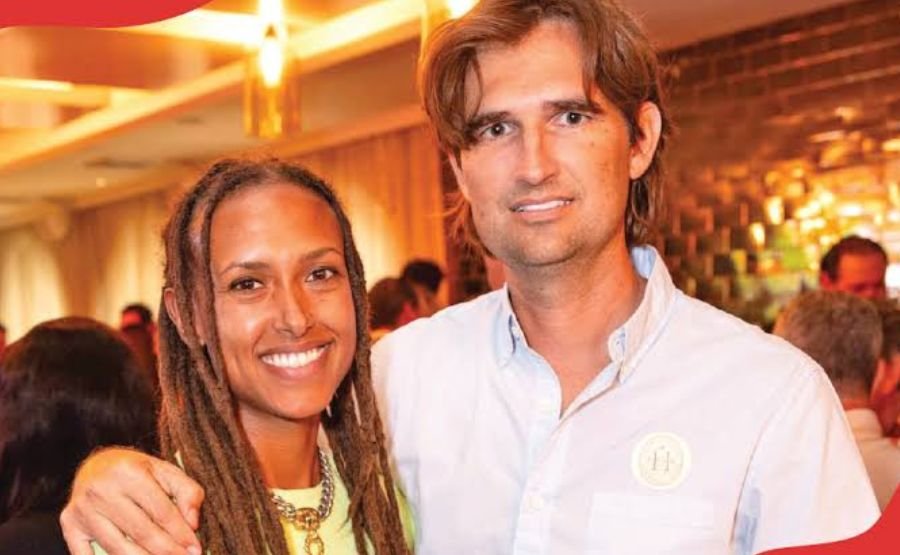
The Pivot to Law: More Interesting Than It Sounds
Look, a musician becoming a lawyer is a narrative that practically writes itself as either a failure story or a redemption story, depending on your mood. The lazy version is: band didn’t make it, guy got a real job. The slightly more truthful version, which takes more work to find, is different.
Hanley attended Southwestern University School of Law and was admitted to the Florida Bar in May 2018. He has been documented working at the Legal Aid Society of Palm Beach County on the Heirs’ Property Project — a program helping low-income families with clouded property titles, estate planning, and the kind of generational wealth protection that doesn’t make anyone rich but matters intensely to people who have almost nothing else. A quote attributed to Hanley in coverage of a 2025 training series says: “With the recent surge in property values and demand for land in Palm Beach County, heirs’ property work is more important than ever. Many families, some who have lived in their homes for generations, can’t access crucial benefits.”
His brother Drew Hanley, it’s worth noting, is also an attorney who spent years at Legal Aid PBC before moving to a private firm. So this is not a random pivot. This is someone going in a direction that seems to have been in the family’s particular orbit for a while. That context gets dropped in almost every profile because it doesn’t fit the simple “rocker turned lawyer” headline.
There’s a contradiction in the record here, too. Some sources say he now works at the Grantham Law Firm in West Palm Beach. Others say the Bruce Law Firm. One source says Los Angeles. I can’t reconcile these. The Florida Bar listing is the most reliable primary document, and it shows him as an active member in good standing, but the specific employer is one of those details that gets sloppily paraphrased in secondary coverage until you can’t trust any single version.
The Second Life: Mumbi O’Brien and a Daughter Named Muoni
After the divorce, Hanley married Mumbi O’Brien, a visual artist and costume designer. They have a daughter, Muoni, born May 2020. These details — when you find them at all — tend to get listed almost as footnotes, a “life goes on” paragraph before the article wraps up with a neat positive bow.
I think about what it means to rebuild after a marriage that made you famous by association, to find something quieter and presumably more private. O’Brien’s name barely surfaces in any of the coverage. Muoni is mentioned once or twice. Hanley has not, as far as any public record shows, gone on record talking about any of this in any meaningful way.
That could read as admirable self-protection. It could also read as a man who learned his lesson about what happens when your private life becomes content.
The Contradictions That Keep Me Honest
A few things in the record genuinely don’t add up, and I want to name them directly. One profile says Hanley’s father was a “sports journalist.” Most others say he was an athlete. These are not the same thing. Somewhere a fact got changed in the telephone game of content aggregation, and neither version has a citation you can actually follow.
Some sources say Ghost Lion/Kin Cayo started in 2016 — which is simply false if you’ve read the 2011 Sonicbids profile and the New York show listings from that era. The band existed before the EP Dim Echo. The confusion appears to come from people conflating the 2016 relaunch with the band’s origin point. It’s a small error that tells you something about how carelessly these profiles were assembled.
And that promised 2012 debut LP? Nobody explains where it went. It just doesn’t exist in the public record. That’s not a scandal — albums fall through all the time — but it’s also not nothing. It’s four years of a person’s creative ambitions that got quietly shelved, and the silence around it is the most honest signal in the whole timeline.
Final Words
Here’s my actual judgment on Blake Anderson Hanley after all of this. He’s someone who made interesting, if small-scale, music that deserved a slightly different fate than being perpetually categorized as a celebrity ex-husband’s footnote. He pivoted — maybe out of necessity, maybe out of genuine conviction — to work that is substantively good for people who need legal help and can’t afford it. He maintained enough privacy through everything that the actual interior of his story is still mostly his own. I respect that, even while finding it mildly frustrating as someone who’s been trying to piece together the real timeline.
What I don’t particularly respect is the way the internet has responded to him — which is to say, the way the internet churns out interchangeable articles that present themselves as informative and are actually just parasitic on each other. He gets described as “a man of many talents” in every third paragraph. He gets called “inspiring.” None of those writers know him. They’re doing what the algorithm rewards, which is making celebrity adjacency readable enough to monetize. Hanley — so far as I can tell — has never asked for or encouraged any of it. And there’s something quietly dignified about that, even if it also means the accurate version of his story is harder to find.
Let’s be honest: the most interesting thing about Blake Anderson Hanley isn’t that he was married to Emily Wickersham. It’s that he wasn’t interested in being defined by it.
FAQs
1. Who is Blake Anderson Hanley?
He’s a Palm Beach-raised musician, songwriter, producer, and Florida attorney who fronts the indie project Ghost Lion and now works in public-interest law. Most people find him by searching for Emily Wickersham’s ex-husband, which is accurate but reductive.
2. What is Ghost Lion?
Ghost Lion is Hanley’s primary musical vehicle — formerly known in some form as Kin Cayo — a South Florida-rooted project he describes as “subtropical world-pop,” with a sound that mixes calypso elements, post-punk guitars, and pop structure. The 2011 EP Junk Food For Thoughts and the 2016 EP Dim Echo are the documented releases.
3. Why did Blake Hanley and Emily Wickersham divorce?
No public explanation has ever been offered by either party. They divorced in December 2018 after eight years of marriage. Anything beyond that is speculation, and anyone who tells you they know the reason is inventing it.
4. When did Blake Hanley become a lawyer?
He was admitted to the Florida Bar on May 23, 2018. The same year his divorce was finalized. He attended Southwestern University School of Law and has since worked in public-interest contexts, including the Legal Aid Society of Palm Beach County’s Heirs’ Property Project.
5. Is Blake Anderson Hanley still making music?
Ghost Lion remains his active musical identity. Whether there’s new material in progress beyond the Dim Echo era is genuinely unclear — his public profile on music has become quieter than his legal work, which is actually the more documented story at this point.
6. Who is Blake Hanley’s current wife?
Mumbi O’Brien, a visual artist and costume designer. They married after his divorce from Wickersham and have a daughter named Muoni, born May 2020.
7. What does Blake Hanley do for work now?
Legal work, primarily in Florida. He has been publicly linked to the Legal Aid Society of Palm Beach County and the Heirs’ Property Project. Some sources say he moved to a private firm in West Palm Beach; others say Los Angeles. The Florida Bar shows him as active.
8. What is the Kin Cayo connection?
Kin Cayo appears to be an earlier iteration or name for the musical project that eventually became the Ghost Lion known from the 2016 EP. Some sources treat these as separate bands; they’re more likely the same project in different phases.
9. Did Ghost Lion ever release a full-length album?
A debut LP was announced in coverage of the 2011 EP Junk Food For Thoughts and expected for “early 2012.” There is no documented evidence it was released. The next Ghost Lion release on record is the 2016 EP. That four-year gap has never been publicly explained.
10. Is Blake Hanley related to Drew Hanley, the Florida attorney?
Yes. Drew Hanley is listed across multiple sources as Blake’s sibling. Drew also worked at the Legal Aid Society of Palm Beach County, which appears to be more than a coincidence in career direction.
11. Why does so much of the coverage of Blake Hanley seem copy-pasted?
Because it is. He’s a celebrity-adjacent figure who generates search traffic without doing press, which means dozens of content sites have written nearly identical profiles drawing from each other and from thin public records rather than any original reporting or interviews. The “inspiring dual-career” framing is a byproduct of the format, not genuine insight.
Explore ideas that enrich your mind with The Aura Magazine.
One Comment