
Peter Halsey Cook: The Man Who Made Himself the Story
The popular version of this story has a clear villain. And look, that version isn’t wrong exactly — it’s just incomplete in ways that have always bothered me. Peter Halsey Cook had an affair with an 18-year-old who worked for him, paid her $300,000 to stay quiet, and then watched his wife put the entire thing on a courtroom table in front of TV cameras. That’s the story. That’s what everyone remembers. But there’s something in the gap between the man who stood at an altar in the Hamptons in 1996 and the man who went on Barbara Walters in 2008 to explain his “needs” that the tabloid timeline never really reckoned with. I’ve been watching this story for a long time. I’d like to try.
See also “TACOMA SIMMONS: Growing Up in the Shadow of Someone Who Couldn’t Stay“
Quick Bio
| Detail | Info |
| Full name | Peter Halsey Cook |
| Birth | c. 1959–1960, New Jersey, USA |
| Profession | Architect and real estate developer, Water Mill / Hamptons, NY |
| Firm | Peter Cook AIA, Architect |
| Marriage 1 | Christie Brinkley, September 21, 1996 — July 2008 |
| Daughter | Sailor Lee Brinkley-Cook (b. 1998) |
| Adopted son | Jack Paris Brinkley-Cook (from Brinkley’s prior marriage) |
| Affair discovered | 2006, Diana Bianchi, then 18 |
| Divorce finalized | July 10, 2008 |
| Settlement | Brinkley paid Cook $2.1 million; she retained 18 properties and sole custody |
| Post-divorce | Married Suzanne Shaw (2012–2014); engaged to Alba Jancou 2019; married Jancou in Capri, Italy 2023 |
Before the Headline Existed
You need to understand something that gets lost the moment you type his name into a search engine. Peter Cook was an architect. A real one. A practicing, credentialed, working Hamptons architect who had been building luxury residential homes for wealthy clients in one of the most competitive real estate markets in the country long before he ever showed up in a gossip column. He had a career. He had a reputation. He had a firm — Peter Cook AIA, Architect — that people sought out specifically for high-end residential work in the Water Mill and broader Hamptons area.
His name appeared in journalism before 2006, but it appeared in architecture journalism, in the kind of coverage where people discuss sightlines and material choices and the particular challenge of building near water. That version of Peter Cook is basically unfindable now. The SEO is so completely dominated by the divorce that you have to work to find any trace of the professional before the tabloid.
He was also, apparently, a former model — Wikipedia notes that he and Christie Brinkley once modeled together in 1979. So the relationship, when it began in the mid-1990s, was not simply a celebrity picking up a civilian. These were two people who had moved in overlapping worlds. A mutual friend introduced them. That detail got approximately three sentences in news coverage and hasn’t been touched since.
The Marriage Nobody Was Watching
They married in September 1996 in Bridgehampton. Sailor was born two years later in 1998. Cook also adopted Jack, Brinkley’s son from her prior marriage to developer Richard Taubman. By all public accounts through the late 1990s and into the early 2000s, this looked like what Brinkley always said she wanted: the picket fence, the blended Hamptons family, the life that worked on paper and apparently worked in practice, at least for a while.
Here’s the detail that sits with me. In the divorce trial testimony, Brinkley’s own lawyer quoted her as having said — during the marriage — “Peter is our rock. He’s the calm in the middle of the storm.” This was not a woman who felt overlooked or undervalued by her husband, at least not until things collapsed. And yet, two weeks into the divorce, Cook was sitting across from Barbara Walters on ABC’s 20/20 explaining that he had the affair because Brinkley hadn’t given him enough “acknowledgement” and “a little thank-you every now and then for my efforts.”
Those two things can’t both be fully true. Either you’re someone’s rock and they know it, or you’re a man who felt neglected enough to build an entire parallel emotional world with an 18-year-old toy store clerk. Something happened in that marriage that neither side has fully accounted for. I’m not excusing what he did. I’m just noting that the Barbara Walters interview was the worst possible vehicle for whatever real grievance he might have had.
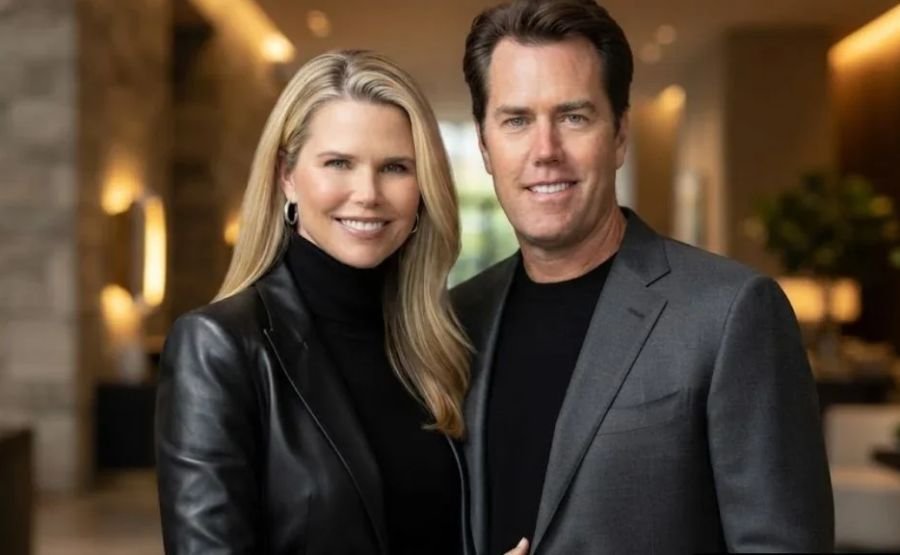
Diana Bianchi and the Competing Accounts
The affair began in the summer of 2004. Diana Bianchi was working at a Hamptons toy store, was 18 years old, and Cook was 44 or 45. He met her there, the store closed for the season, and he offered her a job at his architecture firm. This is confirmed by both parties. What happened next is where the accounts diverge.
Cook’s version, offered in court: Bianchi came into his office, took off her clothes, and announced she wanted to have sex. He said she was the one who started it. He cast himself as a man who made a terrible choice in a moment of weakness.
Bianchi’s version: Cook had been making verbal advances for some time before anything physical happened. The escalation was gradual, he was the one steering it, and she was young enough and trusting enough not to fully see where it was heading until she was already in it. She said he talked openly about being unhappy at home.
Look at the power differential here and you understand why the courts ultimately gave Brinkley sole custody. This was a man in his mid-forties, running a business where a teenager worked, in a region where his family connections meant everyone knew everyone. The fact that Cook’s lawyer presented the Bianchi defense — that she seduced him — in open court and apparently expected it to land is itself revealing about how Cook assessed his own position in the world.
The $300,000 is the detail nobody forgets. He testified that he paid it to her to keep quiet. He had sex with her in his architecture office and in at least two of Brinkley’s homes — the homes he was living in, the homes he hadn’t built but helped design features of. When the trial came, the stepfather of Bianchi — a police officer — was the one who broke the news to Brinkley, approaching her after she gave a commencement speech at Southampton High School. He told her: “That husband of yours just won’t knock it off.”
The Open Trial Question Nobody Answers Fairly
Here’s a part of the story where I’ll admit I’ve gone back and forth. The question of whether the trial should have been open — whether Brinkley made the right call — is genuinely complicated, and I don’t think the coverage ever settled it honestly.
Cook opposed the open trial. The children’s own appointed legal guardian opposed it. Cook’s lawyer accused Brinkley repeatedly of wanting to “publicly flog” her husband. And Dahlia Lithwick wrote for Slate at the time that the whole thing was essentially a PR war, with Brinkley leveraging the public forum for reasons beyond simple transparency.
But Brinkley’s lawyer countered that all divorce hearings are technically public, and that the salacious details — the affair, the pornography spending, the online profiles — were already tabloid news, already circulating. Sending the kids to summer camp during the trial was her practical answer to the concern about their exposure.
The court-appointed forensic psychologist, for his part, said both parents had “done a superb job” of parenting while simultaneously diagnosing Cook as a narcissist who “needed unending praise” and recommending sole custody go to Brinkley. That’s a strange combination of sentences — great father, also clinically needs constant attention — but it tracks with what Cook kept demonstrating outside the courtroom.
The Barbara Walters Problem
Of all the decisions Peter Cook made in the years following the divorce, the Barbara Walters interview in late 2008 is the one I keep returning to. He had just signed a settlement — one that included a confidentiality clause. His lawyers knew about the clause. He went on 20/20 anyway.
The stated goal was rehabilitation. He told Walters: “My hope is that the world will see that I’m not the scumbag pervert that I’ve been painted to be.” He attributed the affair to feeling unappreciated, wanting acknowledgment, failing to find connection in his marriage. He sounded, to anyone watching, like a man trying to distribute blame at the moment when accepting it wholesale was his only viable path back to any kind of dignity.
Brinkley’s lawyers filed that he had violated the settlement. And she was right, legally and strategically. Because here’s the problem: even if every word Cook said to Walters was true, the interview proved the narcissist diagnosis more than it refuted it. The settlement was signed. The story was over. The only possible reason to go back on television was to have more people talking about Peter Cook.
He called Brinkley a “narcissistic egomaniac” in a Daily News blog in 2012. She was calling him “an extreme narcissist” outside the courthouse in 2009. By that point they were essentially trading a clinical insult back and forth through the press while their kids, now teenagers, were presumably watching. The court-appointed psychologist had made the initial diagnosis. Neither of them was willing to let the other have the last word.
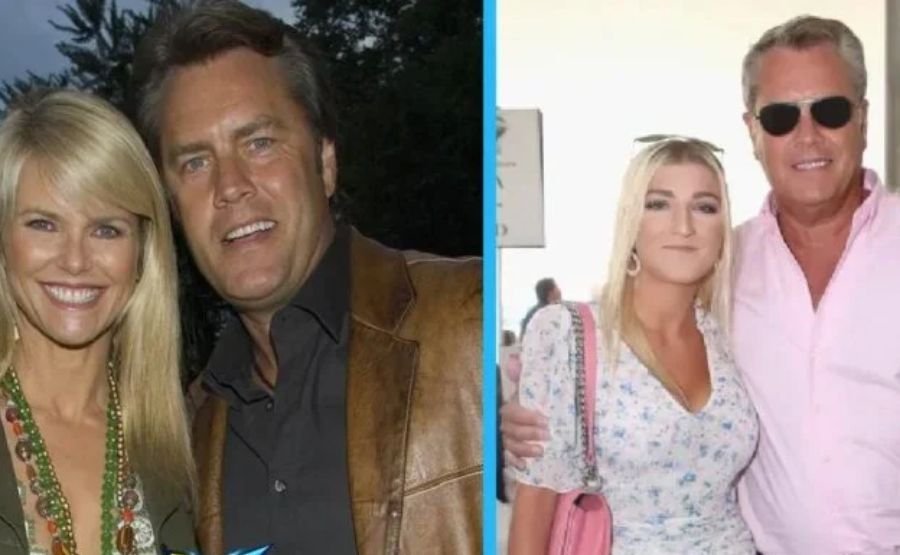
The Alexa Ray Joel Detail
There’s a moment in the trial testimony that never got the attention it deserved. Alexa Ray Joel — Brinkley’s daughter with Billy Joel, who was 22 at the time of the trial — testified that in 2003, after a shower she took caused a leak into the kitchen below, Cook came upstairs furious, grabbed her by the head in the hallway, and shoved her face into a bucket of water, yelling at her to clean it up. She was wearing only a towel.
Cook denied it categorically. His lawyer dismissed it.
But Alexa Joel also testified that Cook had been “constantly” critical of her — of how she chewed, of her piano playing. Brinkley testified that Cook didn’t want Alexa to play piano, which pained her deeply. The picture assembled was not a man who was simply a flawed romantic partner. It was a man who, within the domestic environment, carried a simmering contempt for people who occupied space he felt was his.
Whether the bucket incident happened exactly as Alexa Joel described it, I can’t know. But you pair it with the other patterns — the teen employee, the online profiles, the suicide threat when first confronted, the blaming of Bianchi as the seducer — and you get something coherent and not particularly flattering.
What the Post-Divorce Life Says
After 2008, Cook stayed in the Hamptons. His firm, Peter Cook AIA, Architect, kept operating. The prediction that his career was finished turned out to be wrong — the Hamptons is a particular economy, and wealthy clients in Water Mill have short memories or simply don’t care.
He married Suzanne Shaw on Valentine’s Day 2012, just over three and a half years after the divorce was finalized. That marriage lasted two years, ending in 2014. No major public drama. No coverage worth mentioning. The pattern was reset quietly.
He met Alba Jancou in 2018. Reports vary — she was 21 to his approximately 58 or 59. He proposed in September 2019 in Santorini, Greece, with a six-carat diamond ring. In August 2023, they tied the knot in Capri, Italy. She was born, depending on the source, around 1997 or 1998 — roughly the same age as Sailor, his own daughter.
I’ll give you some time to consider that. The sympathetic version is that people find love where they find it and age differences in relationships among consenting adults are nobody’s business. That’s true. The less sympathetic version — the one you notice if you’ve followed this story for a while — is that the age gap between Cook and each significant woman in his life has never really shrunk. Diana Bianchi was 18 when he was in his mid-40s. Alba Jancou is roughly the same age as the daughter he had with Christie Brinkley. The Hamptons moved on. The press moved on. Some patterns don’t.
The Version of Cook the Coverage Missed
Let me be fair for a second, because I don’t think I’ve been fully fair yet.
There were people in Cook’s circle who tried to present a different picture. A Counterpunch piece from 2012 written by someone who knew him personally argued that the World magazine article about the affair was a hit job — that the writer had been on the King’s College payroll until Cook fired him, that the editor had a personal grudge. Wait — that’s Dinesh D’Souza. Wrong story. But the point stands: the people around Cook genuinely believed Brinkley’s decision to keep the trial public was motivated as much by revenge and publicity as by principle.
The court-appointed psychologist did say both parents were excellent with the kids. Cook did remain in the children’s lives after the settlement — the arrangement, however acrimonious, did give him time with Sailor and Jack. When Sailor became a Sports Illustrated Swimsuit model and went on Dancing with the Stars, there was no public warfare. She speaks warmly, as far as the public record shows, about both parents.
And Cook’s claim that Brinkley violated the confidentiality terms first — by speaking to journalists about him being a deadbeat dad, by filing papers that became public — has at least some legal basis. The court proceedings in 2012 ended in a settlement that apparently provided financial compensation to Cook and established an intermediary to monitor communications. That’s not nothing.
Final Words
Here’s where I land. Peter Cook is not a monster, but he’s not a victim either, and the Barbara Walters interview told you everything you needed to know about which of those two framings he preferred. He made a series of choices — the affair, the payoff, the interview, the blog post, the years of legal harassment — that each individually might be explainable and together form something pretty clear.
What I find genuinely interesting, all these years later, is that he kept building. The firm still runs. The marriages kept happening. The Instagram posts keep going up. There is in Peter Cook an almost remarkable refusal to disappear, which is either a form of resilience or a form of the thing the psychologist diagnosed in 2008. Maybe both. The Hamptons is a small world where everyone eventually builds a deck for everyone else’s enemy, and Cook understood that instinctively. He stayed.
What you can say is that he was, before all of this, a competent architect with a real practice who married the most famous woman in his world and then made choices that guaranteed the marriage would define him instead. That’s not tragic exactly. But it’s not nothing either.
FAQs
1. Who is Peter Halsey Cook?
He’s an American architect and real estate developer who operates a luxury residential practice in the Hamptons. Most people know him as Christie Brinkley’s fourth husband, the one who had the affair. The professional life before and after that description exists, but good luck finding it.
2. How did Peter Cook and Christie Brinkley meet?
Through a mutual friend, sometime in the mid-1990s. It’s also documented that the two had modeled together as far back as 1979. The meeting wasn’t random — they already moved in overlapping circles.
3. Why did Peter Cook and Christie Brinkley divorce?
Cook had an affair with Diana Bianchi, an 18-year-old who had worked at a Hamptons toy store before he hired her at his architecture firm. The affair began around 2004-2005 and was discovered in 2006 when Bianchi’s stepfather, a police officer, told Brinkley at a high school commencement event.
4. How much did Cook pay Diana Bianchi?
He admitted in court to paying her $300,000. He had sex with her in his office and in two of Brinkley’s Hamptons homes. The IRS reportedly had questions about the unreported cash payments.
5. What happened at the divorce trial?
Brinkley fought to keep it open to the public. Cook and the children’s appointed lawyer opposed that. The trial produced five days of testimony about the affair, Cook’s roughly $3,600-per-month pornography habit, his profiles on websites where he offered to pay women for sex, his suicide threat when confronted, and Alexa Ray Joel’s account of the bucket incident. A court-appointed psychologist diagnosed Cook as a narcissist. Settlement gave Brinkley sole custody and 18 properties; Cook got $2.1 million.
6. What did Cook tell Barbara Walters?
He said he was “not the scumbag pervert” he’d been portrayed as, and that the affair happened because his needs weren’t being met and Brinkley hadn’t given him enough acknowledgment. This interview violated his confidentiality agreement. His lawyers apparently couldn’t stop him.
7. Did Cook’s architecture career survive?
Yes. His firm, Peter Cook AIA, Architect, based in Water Mill, kept operating in the Hamptons. The prediction from Fox News in 2008 that his career was over was wrong.
8. What is the “narcissist” diagnosis about?
A forensic psychologist appointed by the court during the 2008 trial diagnosed Cook as a narcissist who needed constant praise. Cook later called Brinkley a “narcissistic egomaniac.” She called him “an extreme narcissist.” For about four years the word “narcissist” was just volleyed between them through the press.
9. Who is Alba Jancou?
His current wife, married in Capri in August 2023. Cook proposed in Santorini in September 2019 with a six-carat ring. She was approximately 21 or 22 when they got engaged, making her roughly the same age as his daughter Sailor.
10. What is Sailor Brinkley-Cook doing now?
She’s a successful model and media personality in her own right — Sports Illustrated Swimsuit edition, Dancing with the Stars in 2019. She carries both parents’ surnames. The public relationship with her father appears to exist without the warfare that characterized the Cook-Brinkley years.
11. Is there anything that contradicts the dominant narrative about Cook?
A few things. The court-appointed psychologist said both parents had done “a superb job” with the kids while also recommending Brinkley for sole custody. Cook’s legal filings in 2012 had some factual basis — the settlement did result in financial compensation to him. And at least one piece from 2012 (Celebdirtylaundry) made the fair point that Brinkley insisting on an open trial, over the objection of her children’s own lawyer, is worth examining for its own motivations. None of that changes the core facts of what Cook admitted to. But the portrait the press painted was flatter than the reality.
Explore ideas that enrich your mind with The Aura Magazine.





One Comment