Bella Thorne Disability: What Everyone Memorized Isn’t Necessarily What Happened
The version of this story you know is clean. Almost too clean. Scrappy kid from Florida, dyslexia diagnosis in first grade — or was it second, or third, depending on which interview you’re reading — gets bullied, attends Sylvan Learning Center, lands a Disney show where her disability is written into the character, goes on to make inspirational PSAs. Triumph. Resilience. Brand intact. You’ve heard it. You’ve probably repeated it. I have too, without thinking about it much until I started pulling on the threads.
Quick Bio
| Detail | Info |
| Full name | Annabella Avery Thorne |
| Born | October 8, 1997 — Pembroke Pines, Florida |
| Diagnosis | Dyslexia (grade varies by source: 1st, 2nd, or 3rd) |
| Father | Delancey “Rey” Thorne, Cuban descent; died motorcycle accident, 2007 |
| First language | Spanish |
| School exit | Left public school due to peer bullying; homeschooled |
| Key intervention | Sylvan Learning Center — reading/writing improved to grade ahead |
| Disability goes public | Disney Channel PSA, “The Time I Found Out I Had Dyslexia,” ~2011–2012 |
| Abuse disclosure | January 2018, Instagram post — physical and sexual abuse, “from the day I can remember till I was 14” |
The Diagnosis That Keeps Moving
Let’s start with the most basic fact. When was Bella Thorne actually diagnosed with dyslexia? Look it up. Go ahead.
Fox News says third grade, when her mother pulled her out of school. Simple Wikipedia says first grade. The fandom wiki says first grade. A different biographical summary says second grade. Her own Hola! USA interview from 2021 has her saying “when I went into third grade I was diagnosed with dyslexia.” One source I dug up from a school essay contest circa 2012 — a kid who clearly did research at the time — says second grade, which matches the most commonly cited version in earlier fan sites.
You’d think a cornerstone fact of someone’s personal narrative would be consistent. It isn’t. And no one really pushes on that.
I’m not saying she’s lying. I’m saying the story got laundered through Disney PR, re-told in thirty teen magazine interviews over five years, and somewhere in all that retelling the specifics got soft. Honestly, that’s what happens with any trauma story that becomes a brand asset. It stops being a memory and starts being a pitch.
See also “Deni Montana Harrelson: The Daughter Who Chose Daylight“
Spanish First, Dyslexia Second — And Why That Order Matters
Here’s the thing that genuinely bothered me when I went back through the sources. Bella grew up speaking Spanish as her first language. Her father was Cuban, the family spoke Spanish at home. She has specifically said — in a Hola! USA cover interview — that when she started school and was struggling to read, a learning center recommended she stop speaking Spanish entirely and focus on English, because she couldn’t read in one language let alone two.
That recommendation cost her the language. She has said, more than once and with real sadness, that losing Spanish feels like losing her father. It makes her emotional when she visits Spanish-speaking countries because she starts to pick it up and then it slips away again.
Now. Here is the thing that some online critics noted and that the uplifting narrative completely swallows: if a child is a native Spanish speaker entering an English-dominant school system, they will struggle with English reading. That is not a learning disability. That is a language acquisition issue. Did anyone rule that out carefully before the dyslexia label was applied? The Disney PSA never mentions it. The inspirational cereal-box-reading story doesn’t mention it. You have to find the Hola! interview, the one aimed at a Latino audience, before she even brings it up.
Both things can be true — she could have genuine dyslexia AND a confounding language situation. But the clean Disney version never acknowledged the complication existed.
The Commercial and What It Actually Was
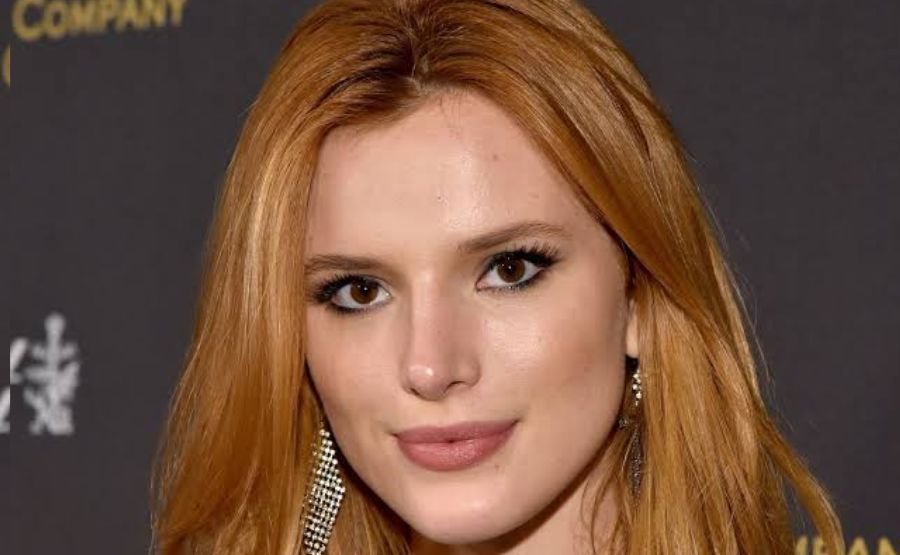
If you were a kid watching Disney Channel between 2010 and 2012, you know the commercial. Soft focus. Earnest music. Bella looks straight into the camera and says “My name is Bella Thorne and this is the story of the time I found out I had dyslexia.” It became an audio meme years later on TikTok. Gen Z knows it almost by heart.
Here’s what’s obvious in retrospect: that commercial dropped in the same window that Shake It Up was becoming a hit. The show’s writers had already incorporated CeCe Jones having dyslexia — Bella herself said in a People interview that a writer had “figured out” she had the condition and made it part of the character, and she described it as a “sweet moment.”
Look, I’m not cynical enough to say it was purely calculated. But I am skeptical enough to note that the timing was perfect. A Disney property with a dyslexic protagonist, a real teen actress with dyslexia, a PSA to reinforce the message, and a built-in advocacy angle that made Bella sympathetic and untouchable to critics. That’s not serendipity. That’s vertical integration of a personal story.
And the skepticism goes further. She was a child. She didn’t draft that commercial. She didn’t write the framing. Adults — Disney adults, specifically — decided how her disability would be packaged, when it would be disclosed, and in what emotional register it would be delivered. She was 13 or 14. She trusted them.
What Disney Actually Did With Her
Let me be honest about something. When I started following Bella Thorne’s story, I found the Disney chapter oddly underexamined. The disability narrative was prominent; the context around it was not.
Disney reportedly tried to fire her at 13 after a tabloid ran photos of her in a bikini. Their official statement, which leaked, said they had “discussed with the Thornes how they envisioned Bella’s personal brand image and career goals.” That’s corporate language for: we considered dropping her for being a teenage girl in normal teen clothes. She had just made their dyslexia PSA. She was their inclusivity poster. And in the same year they were considering terminating her contract because a paparazzi photo was inconvenient.
That’s the institution that packaged her disability for mass consumption. You keep that in mind.
The Abuse Layer Nobody Connects Back to the School Story
In January 2018, Bella posted on Instagram that she had been physically and sexually abused “from the day I can remember till I was 14,” by someone she was raised with. A year later on ABC News she said it started at six.
Here is what I have never seen anyone put together: she was diagnosed with dyslexia around age six or seven, in the middle of this abuse window. She was bullied at school. Her father died when she was nine. She lost her first language around the same age. She was pulled out of school. She was homeschooled through what, by her own account, were years of ongoing abuse.
The disability narrative, as it was later packaged, reads as: child struggles, gets diagnosed, works hard, overcomes. But the actual context of her early years was: child experiencing ongoing trauma and abuse, grieving a dead parent, losing her home language, being bullied by peers, and also possibly struggling with a learning difference. Those are not the same story. One of them is an after-school special. The other one is a lot darker.
I am not saying the dyslexia diagnosis was wrong. I’m saying the overcoming narrative was an extraordinary simplification of what her childhood actually contained. And the simplification was useful to people other than her.

The “Overcame It” Mythology
This deserves its own moment of skepticism. Bella has said, repeatedly, that she “overcame” dyslexia by reading everything she could find: cereal boxes, directions, scripts. This got repeated so many times it became fact. By 2010, American Cheerleader magazine was quoting it. Fan sites were quoting it. Wikipedia links to it.
But dyslexia doesn’t work like that. You don’t overcome dyslexia by reading more. What likely happened — and this matches what she says about learning to read scripts herself, about memorizing by listening — is that she developed compensatory strategies. That’s real, valid, and actually impressive. But “I overcame a neurological difference by reading cereal boxes” is not a clinical description. It’s a quote engineered for mass consumption.
The more credible later admission, which got far less coverage, was that she taught herself to read largely through scripts. She also said in an Ace Showbiz interview that she never really wrote scripts and that her independent streak grew from teaching herself after her father died. That version is less tidy. It makes it sound less like a victory lap and more like a child doing what she had to do without adequate support.
The Inconsistencies That I Can’t Dismiss
I want to be clear: I believe Bella Thorne has dyslexia. The pattern of her struggles — confusing letters, bilingual complications, the slow reading that required specialized support — is consistent with a genuine diagnosis. I’m not one of those people saying the whole thing was invented.
But the inconsistency in the grade of diagnosis bothers me. The smoothness of the commercial narrative bothers me. The fact that her very complicated childhood — poverty, father’s death, ongoing abuse, language deprivation — was reduced to “she had dyslexia and she worked hard” bothers me. It’s a story that served Disney’s brand, served the dyslexia awareness industry, and served a public image. What it didn’t do was ask hard questions about who was managing this teenager’s trauma disclosure, and why the full picture never made it into the PSAs.
The Post-Disney Unraveling
After Shake It Up ended, Bella went through a period that the press handled badly. She moved into edgier roles, was vocal about being pansexual, had overlapping relationships that the tabloids dissected with obvious relish. She became famous for being “chaotic.” The same press that had praised her disability advocacy started treating her as a cautionary tale.
What’s interesting is that she did, in this period, start telling her story differently. Less polished. More raw. The 2018 Instagram post about abuse wasn’t coordinated. It wasn’t soft-focus with earnest music. It was genuinely unscripted. And the response was much less tidy — people didn’t know how to process it the way they had processed the dyslexia commercial, because there was no narrative machine behind it, no PR management, no branded takeaway.
She even said in one interview, talking about her public persona: “I literally refer to Bella Thorne as this persona who’s like this redhead — ‘ooo I’m Bella Thorne, I’m crazy!’” And when asked who the real Bella Thorne was, she didn’t answer cleanly. Because she knows there’s a difference. She’s known for a long time.
Final Words
Here is where I land, after years of watching this story get told and retold. Bella Thorne has dyslexia. That part is real. What is also real is that her disability became a product before she was old enough to decide whether she wanted to sell it. Disney took the most legible part of her difficult childhood — the learning difference, the overcoming arc — and used it, well-meaningly perhaps, to build a brand story. The messier parts: the abuse, the poverty, the grief, the language loss, the inconsistent timeline — those stayed in the footnotes.
She’s not a villain and she’s not a saint and she’s not, frankly, just a “resilience story.” She’s someone who had a genuinely hard early life and one piece of it got turned into a commercial before she could properly understand what that meant. The skepticism isn’t about whether the dyslexia is real. The skepticism is about who benefited from the particular way it was framed, and who never got to ask: what else was happening to this kid at the same time?
I still find myself interested. And a little bitter. Because the full story was always more interesting than the one we got.
FAQs
1. Does Bella Thorne actually have dyslexia or was it a PR story?
She has it. The evidence is consistent across years of interviews and behavior. But the way it was packaged for public consumption by Disney at the height of Shake It Up was absolutely a PR strategy layered on top of something real.
2. What grade was Bella Thorne diagnosed with dyslexia?
Depends on who’s asking and when. Her own interviews over the years say first grade, second grade, and third grade. The most common early source says first grade. Her Hola! interview says third. Nobody’s pinned this down definitively.
3. Did Bella Thorne really overcome dyslexia?
No, not in any clinical sense. She developed strong compensatory strategies — primarily through scripts and audio. Dyslexia doesn’t disappear. The “overcame it by reading cereal boxes” line is a good quote that flattens what was actually a slow, difficult process.
4. Did Spanish being her first language affect the dyslexia diagnosis?
Almost certainly complicated it, yes. She was a Spanish-speaking child entering an English school system and was told to drop her first language entirely in order to focus on reading English. Whether the diagnosis ever properly separated those two issues is unclear and nobody in the Disney machine asked publicly.
5. Why was Bella Thorne’s dyslexia written into Shake It Up?
A writer on the show apparently figured out she had it and incorporated it into CeCe Jones’s character. Bella has called it a “sweet moment.” Whether you take that at face value or see it as a calculated brand synergy move probably depends on how much credit you give Disney.
6. Was the Disney dyslexia commercial real or scripted?
The commercial was absolutely scripted — it was a produced segment for Disney Channel. The dyslexia behind it was real. These two things can coexist, but people conflate them regularly.
7. Did Bella Thorne’s childhood abuse connect to her learning struggles?
Nobody in mainstream coverage has made this connection, which I find strange. She was experiencing abuse throughout the same years she was being diagnosed and struggling at school. Trauma absolutely affects a child’s ability to learn. The two narratives were kept completely separate.
8. What happened after Bella Thorne left Disney?
She transitioned into adult roles, became publicly pansexual, had overlapping relationships, and started telling a rawer version of her story. The press largely treated this as a downfall arc rather than a person trying to reclaim her own narrative.
9. When did Bella Thorne reveal her sexual abuse?
January 2018 on Instagram, saying it lasted from her earliest memories until age 14. She elaborated in a 2019 ABC News interview saying it began when she was six.
10. Did Bella Thorne lose her Spanish because of dyslexia?
She was explicitly told by a learning specialist to stop speaking Spanish to concentrate on English reading. She credits this as the reason she can’t speak it now — and has said the loss makes her deeply sad, connecting it to her Cuban father’s death.
11. Is Bella Thorne a genuine advocate for dyslexia or just a spokesperson?
Somewhere between the two, and that’s not an insult. She clearly cares. She’s also someone whose disability disclosure was industrialized by a corporation when she was a teenager. Both things are true and they don’t cancel each other out.