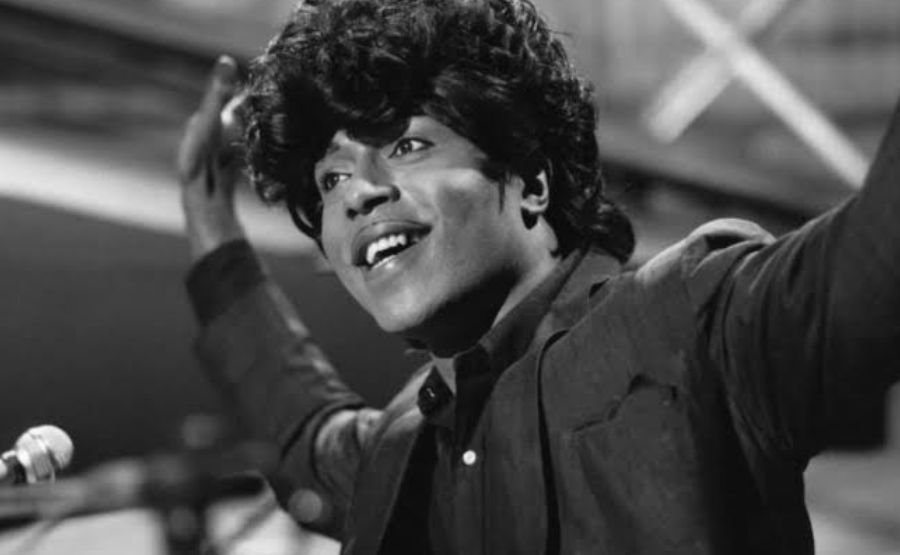
DANNY JONES PENNIMAN: The Son the Story Keeps Getting Wrong
The internet has assigned Danny Jones Penniman at least four different birth years, two different biological mothers, and a rap career complete with album titles that may not exist. That’s a strange kind of fame — being famous for being famous, which means you’re really just famous for being adjacent to someone else. And the whole machine just runs on that adjacency, inventing details to fill whatever gaps the father left behind.
Before we go further, let’s get the basics down, because the basics alone are a mess worth staring at.
Quick Bio
| Detail | Info |
| Full Name | Danny Jones Penniman |
| Approximate Birth Year | Circa 1969–1970 (Rolling Stone quotes him as “49” in 2020, placing birth ~1970) |
| Biological Mother | Creola Jones (confirmed, Rolling Stone 2020) |
| Adoptive Father | Richard Wayne Penniman (“Little Richard”) |
| Adoptive Mother | Ernestine Harvin (married to Richard 1959–1963/64) |
| Formal Adoption Year | 1984 — when Danny was approximately 14 (per Rolling Stone) |
| Adoption Method | Handshake — no legal paperwork |
| Role in Richard’s Later Life | Caretaker, driver companion, bodyguard |
| Confirmed Death Announcement | Yes — broke the news to Rolling Stone, May 9, 2020 |
| Richard’s Death Cause | Bone cancer |
| Inheritance | Danny named primary beneficiary; estate reportedly ~$40 million |
| Music Catalog Rights | Sold to Sony by Richard; Danny does not receive royalties |
The Number Problem Nobody Wants to Solve
You know what’s funny in the least funny way? Almost every website that covers Danny Penniman disagrees on when he was born. We’re not talking about a year off. We’re talking about sources confidently listing 1958, 1959, 1970, 1979, 1995. One blog places his birth in 1942, in New York. Another says Atlanta, 1995. This is not journalism. This is content farming with someone else’s name stapled to it.
The only birth year that holds up to basic arithmetic is around 1970 or 1971. The Rolling Stone feature from May 2020 — the most verified piece of journalism that exists on this man — identifies Danny as being 49 years old at the time of his father’s death. Work backward from May 2020 and you land somewhere in 1970 or 1971. That’s it. That’s the only reliable data point we have, and yet you’ll find a hundred sites asserting other years with equal confidence and zero sourcing.
Let’s be honest: this matters, because it also scrambles the adoption story. If Danny was born around 1970, and Richard adopted him at age 14 in 1984, that tracks. But if he was born in 1958 or 1959 — as many sites insist — then he would have been 25 when he was “adopted at 14.” You can’t hold both those numbers at once. The internet just never stopped to notice the contradiction.
See also “Jacqueline Holte: The Sister Who Became Patti LaBelle’s Conscience“
The Adoption That Wasn’t, Legally Speaking
Here is the detail that most outlets glide past without blinking: the adoption was a handshake. No paperwork. Richard Penniman shook hands with Creola Jones — Danny’s biological mother — after she asked him to take care of her son. That was it. Danny moved into Richard’s two-room suite at the Hyatt on the Sunset Strip, and that became his home for the next 36 years.
Think about what that means structurally. For years, every celebrity biography and fan site referred to Danny as Richard’s “adopted son,” implying a legal, documented arrangement. Many still do. Some sites even list Ernestine Harvin as Danny’s biological mother — which makes no sense, because she and Richard divorced somewhere between 1961 and 1964 (another disputed date, with sources splitting between those two years), and Danny was adopted in 1984, two decades later. The stories were retrofitting Danny into the marriage narrative because it was tidier.
What actually happened, according to Danny’s own account, was something much more neighborhood-level, much more rooted in church community and genuine affection. Richard had been visiting Creola Jones’s home in South Central Los Angeles since Danny was in second grade, throwing bags of coins into the air for the kids to scramble after. After Danny’s father died in 1982, Richard sang at the funeral. When Creola asked him to take Danny in — not wanting him to end up like his siblings, she said — Richard agreed. No lawyer. No court. A handshake between church friends.
That’s not a legal adoption. That’s a promise kept, which is either more or less meaningful depending on your view of paperwork.
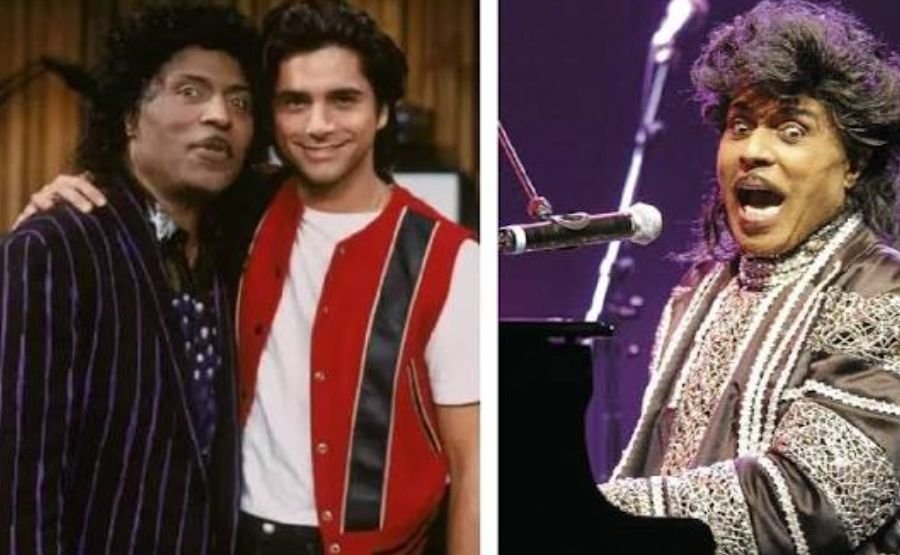
Thirty-Six Years in the Shadow, and Nobody Asked What That Was Like
Look, the Rolling Stone piece from 2020 is genuinely the only place Danny Penniman has spoken at length, on the record, about his life. One interview. One. And it’s a good one — he’s funny, he’s sharp, he remembers details, he describes life with Richard on the road the way someone describes surviving an entertaining natural disaster. You never knew what you were going to get: the comedian, the preacher, the talker, the jammer.
What strikes me, reading it, is how thoroughly Danny had become a part of the furniture of Little Richard’s existence. He drove him 90 miles to Lynchburg and 90 back — 180 miles a day — just so Richard could check his mail. He pushed the wheelchair across the Hilton lobby every morning at 11 a.m. He was the one who knew when Richard had switched from the bouffant wig and sequined jacket to conservative black suits and house shoes with praying hands on them. He was there for the Friday night in 2016 when a YouTube preacher said something about flashy clothes taking attention away from God, and Richard changed, overnight, back into Richard Penniman.
Thirty-six years of that. And the internet mostly just calls him “Little Richard’s bodyguard,” as if that’s a job title rather than a life.
The Music Career Nobody Can Verify
Here’s where the quiet bitterness in me really surfaces. Multiple websites — and I mean dozens — describe Danny Jones Penniman as an “acclaimed rapper” with a substantial discography. They throw out album titles. “Danny’s Groove” (1995). “I Am Me” (2006). Solo singles. Awards. Critical acclaim. Tours.
None of it checks out. Not one title. Not one release that shows up in a streaming service, a music database, a contemporaneous music review. The Rolling Stone interview — the actual, verified source — describes Danny as Richard’s traveling companion, caregiver, and the person who pushed his wheelchair. His own Instagram or social media presence doesn’t surface any music. The same grunge.com piece that actually tracks Richard’s estate explicitly notes that Danny would receive a portion of Richard’s assets but had no known public musical catalog.
The “rapper” descriptor seems to have entered the ecosystem from some early wiki-style entry and then propagated infinitely. It’s the kind of thing that happens when content mills need a hook for a person who has no public hook. He needed to be something on his own terms for the article to exist, so he became a rapper. And now it’s permanent. Good luck searching for the truth through that static.
What He Actually Said About His Father
There’s a moment in the Rolling Stone piece that keeps coming back to me. Danny is describing the later years, when Richard had pulled back from everything — no concerts after 2013, no interviews, turning down offers for films and musicals and tribute events. Tom Jones flew in and Richard pretended over the phone not to be himself, claiming Richard was unavailable. Paul McCartney couldn’t get a dinner set up.
And Danny is asked, essentially, whether his father was bitter. His answer was something like: no. He gave that up. He came to peace with it. The younger Richard was famously furious about how the artists he influenced — Elvis, the Beatles, everyone — got rich while he sold off his publishing rights and barely stayed solvent during his peak years. The older Richard, Danny said, let it go.
I don’t know whether to believe that fully. I think there’s a version of “he wasn’t bitter” that is what a good son says about his dead father. But there’s also probably truth in it. What the Rolling Stone interviews and the broader record suggest is that Richard found a kind of shelter in faith, in the daily ritual of dressing up and coming down in that elevator, in those 180-mile drives with his son. Whether that’s peace or just exhaustion is not for me to say.
What I can say is that Danny seemed to understand Richard in a specific, granular way that most of the music press — which was busy writing think pieces about rock’s debt to Black artists — didn’t bother to access. Danny was there for the house shoes with praying hands on them. The journalists were there for the pompadour.
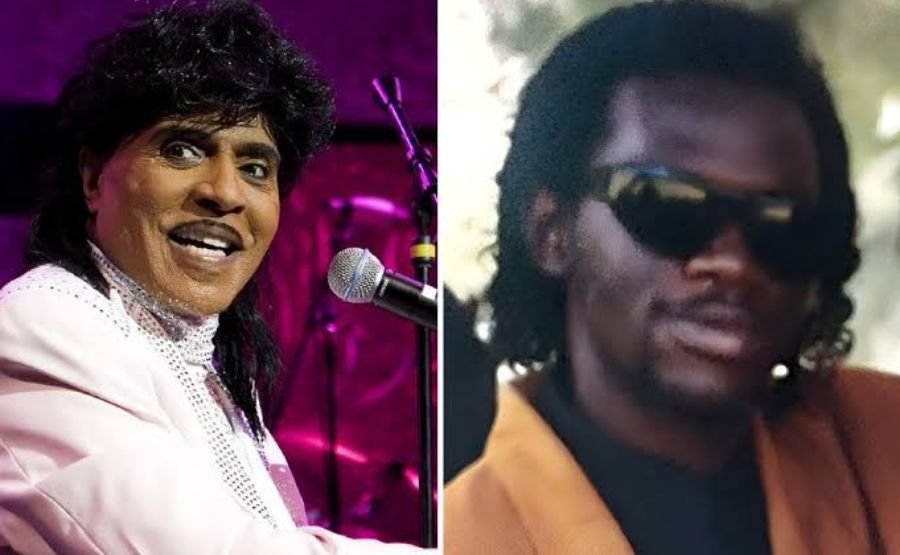
The Estate and the Sony Problem
Richard’s net worth at death was estimated at $40 million, and Danny was named the primary beneficiary. That’s the headline version. The reality underneath is considerably more complicated.
At some point during his career — and this is a well-documented gutpunch — Richard sold the property rights to much of his music catalog to Sony in exchange for cash settlements. This is a pattern so common in mid-century Black rock-and-roll artists that it has its own genre of tragedy: get the upfront money, lose the long-term royalties. So Danny inherits the estate, but not the ongoing income from “Tutti Frutti” every time it appears in a commercial or a movie.
Multiple sources confirm there were disputes among Richard’s family after his death — he had eleven siblings, several potentially surviving him. Some accounts suggest there were legal challenges to the estate before Danny was confirmed as the primary beneficiary and a settlement was reached. The details of that settlement, if it happened, are not public.
What Danny ended up with is a name, a reputation to steward, and a Lynchburg mansion that sold in November 2020 for $349,000. After thirty-six years of being there every day.
The Contradictions Worth Naming
Let me just stack them up, because this is the part that never gets done cleanly.
Sites list Ernestine Harvin as Danny’s biological mother. She’s not. She was Richard’s ex-wife. The couple divorced before Danny was even born by most timelines.
Sites say the adoption happened during Richard’s marriage to Ernestine. It didn’t. It happened in 1984, roughly two decades after the divorce.
Sites describe Danny as a rapper with verified albums. No confirmed discography exists.
Sites give birth years ranging across four decades. The only math-verified year is approximately 1970.
Some sites claim Richard moved to Nashville to be closer to family in 2003. Others say he moved to Lynchburg to be closer to his sister. These are actually the same move told differently — Lynchburg, Tennessee is not Nashville, but they moved to both over time.
See also “Jacqueline Holte: The Sister Who Became Patti LaBelle’s Conscience“
Final Words
Look, Danny Jones Penniman didn’t ask to be a Wikipedia stub. He didn’t ask to become a name that every content mill inflates into something unrecognizable whenever a “Little Richard son” search query needs an article. He was a kid from South Central with six sisters and three brothers, whose mother asked a church friend to take care of him, and that church friend turned out to be one of the foundational figures of American popular music.
What Danny did — staying with Richard for thirty-six years, managing his daily life through hip surgeries and reclusion and 180-mile drives for the mail — that’s not a rapper’s story and it’s not a celebrity story. It’s something quieter and harder than either. The person who was actually there for the end of Little Richard’s life was not a biographer, not a manager, not a journalist. It was the kid Richard threw coins at in a South Central driveway in the early 1970s.
I find that worth more than any fake album title anybody invented to fill a word count.
The internet handed Danny Jones Penniman a mythology he never created and a biography he can barely recognize. The real story — which is essentially one long interview in one magazine, filtered through a few confirmed facts and a pile of contradictions — is messier and more human than any of the content that claims to summarize it.
He confirmed his father’s death to Rolling Stone and then went quiet. That seems like the right move.
FAQs
1. Who is Danny Jones Penniman?
He is the adopted son of Little Richard, the foundational rock-and-roll musician. He served as Richard’s daily caretaker and companion for the last decade or more of Richard’s life and confirmed his death on May 9, 2020.
2. When was Danny Jones Penniman born?
Nobody agrees on this, and that’s the honest answer. Rolling Stone identified him as 49 years old in 2020, which puts his birth around 1970 or 1971. Dozens of sites say otherwise, with years ranging from 1958 to 1995. None of those conflicting dates come with sourcing.
3. Who is Danny Jones Penniman’s biological mother?
Creola Jones, a friend and fellow parishioner of Little Richard’s in Los Angeles. She asked Richard to take Danny in after Danny’s biological father died. Some sites incorrectly list Ernestine Harvin — Richard’s ex-wife — as Danny’s mother.
4. Was Danny Jones Penniman legally adopted?
No. Per Danny’s own account in Rolling Stone, the arrangement was a handshake between his mother and Richard. No legal paperwork. He moved into Richard’s hotel suite at the Hyatt on the Sunset Strip around 1984 and lived with him for thirty-six years.
5. What does Danny Jones Penniman do for a living?
Unclear. He is widely described online as a rapper, but no verified music catalog exists. He worked as Richard’s caretaker, bodyguard, and daily companion in the later years. He may also be involved in preserving Richard’s estate and legacy.
6. Did Danny Jones Penniman inherit Little Richard’s money?
He was named the primary beneficiary of an estate estimated at $40 million. However, Richard had sold his music publishing rights to Sony, so Danny does not receive ongoing royalties from Richard’s songs.
7. Why did Little Richard stop performing?
His last concert was March 30, 2013, in Las Vegas. He was in deep physical pain from complications following a 2009 hip surgery. He told Danny after that show that he was done — it wasn’t worth it anymore. He also increasingly retreated into religious devotion.
8. Did Danny Penniman have a good relationship with Little Richard?
By every available account, yes. The Rolling Stone piece is the only extended primary source, and it paints a picture of genuine closeness — not without friction or complexity, but rooted in real loyalty. Richard sang at Danny’s father’s funeral. Danny pushed Richard’s wheelchair every morning.
9. Where did Little Richard live in his final years?
At the Hilton in downtown Nashville, where he worked out a month-to-month arrangement with hotel management. He and Danny would drive 90 miles daily to Lynchburg, Tennessee, where Richard kept a second home, mostly just to check the mail.
10. What happened to Little Richard’s estate after his death?
There were reportedly disputes among Richard’s surviving family. Danny was ultimately confirmed as the primary beneficiary, with accounts suggesting other family members reached settlements. The Lynchburg mansion sold in November 2020 for $349,000.
11. Why is so much information about Danny Jones Penniman inaccurate?
Because the content-mill economy of the internet requires articles about every famous-adjacent person, and when real facts are thin, the machine invents. Danny has given essentially one interview, to Rolling Stone, in 2020. Everything beyond that is either extrapolation, error, or fabrication, often circulating and being re-cited as fact across dozens of sites.
Explore ideas that enrich your mind with The Aura Magazine.


One Comment