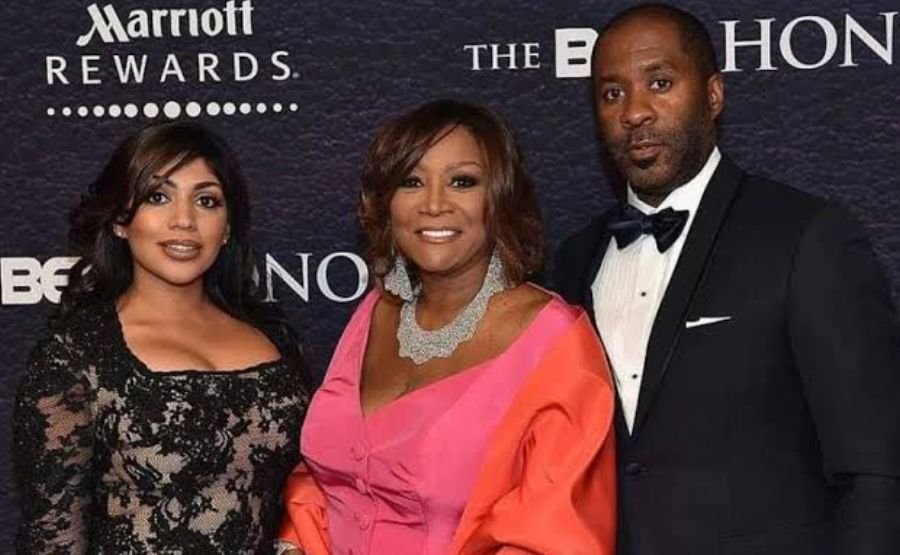
Jacqueline Holte: The Sister Who Became Patti LaBelle’s Conscience
The story the world tells about Patti LaBelle is a story about a voice and a survivor. What it doesn’t always tell you is what she survived. Because one of the defining experiences of Patti LaBelle’s life — arguably the one that shaped her more than any stage or studio — was watching her youngest sister die of brain cancer at forty-three years old, and then living for decades with the specific guilt of a woman who was too tired to make an egg sandwich.
Jacqueline Holte never released an album. She never appeared on a stage. She never gave an interview. She is known to history almost entirely through what her older sister has said about her, decades after her death, with tears rolling down her face in television studios and podcasts and memoir pages. That is a strange way to exist in the record. And look, the strangeness is worth sitting with, because Jacqueline Holte’s absence from the story is precisely what makes her presence in it so loud.
Quick Bio
| Detail | Information |
| Full Name | Jacqueline “Jackie” Holte-Padgett |
| Born | c. 1945, Philadelphia, Pennsylvania |
| Parents | Henry Holte Jr. (railroad worker, club performer); Bertha Robinson Holte (domestic worker) |
| Siblings | Thomas Hogan Jr. (half-sibling, b. 1930), Vivian Hogan Rogers (half-sibling, b. 1932), Barbara Holte Purifoy (b. 1942), Patti LaBelle (b. 1944) — Jackie was youngest |
| Died | July 1989, brain cancer, age 43 |
| Children | William Holte (also known as Byl Holte); Stayce Holte-Padgett — both adopted by Patti LaBelle after Jackie’s death |
| Family context | Third sister to die of cancer before age 44; father Henry died same year (1989) of emphysema |
| Memorial | “If You Asked Me To” music video (1989) filmed the day after her funeral; “Miss You, My Friend” (1989); yellow butterfly symbol |
| Patti’s memoir account | Don’t Block the Blessings (Riverhead Books, 1996) — the egg sandwich story |
The Family This Started In
You need to understand the Holte family before you can understand Jackie’s death, because the death didn’t happen in isolation. It happened as the final act in a sequence of losses that is almost impossible to absorb.
Patti LaBelle was born Patricia Louise Holte on May 24, 1944, in the Eastwick section of Southwest Philadelphia. Her parents were Henry Holte, a railroad worker who also performed in clubs, and Bertha Robinson Holte, a domestic worker. They had five children between them: Thomas Hogan Jr. (1930), Vivian Hogan (1932), Barbara (1942), Patti (1944), and Jackie (1945). Thomas and Vivian were technically half-siblings — the same household, the same parents, the same tight Philadelphia working-class family.
That family came apart in stages. The parents’ marriage was difficult — Patti would write in her memoir that her father’s marriage to her mother was abusive, and they divorced when she was about twelve. Her mother Bertha died in 1978. Her father Henry died in 1989. And between those two deaths, all three of Patti’s sisters died of cancer. All three. Before any of them reached age 44.
Vivian Hogan Rogers died of lung cancer in October 1975. She was 43. That was the first. Barbara Holte Purifoy died of colon cancer in 1982. She was about 41. That was the second. And then Jackie — the youngest, Patti’s closest surviving sister by the mid-1980s — was diagnosed with a brain tumor in her late thirties.
Patti LaBelle, speaking about this later in her life, said: “We just had a fun-loving, fighting family. And then they all died.” That sentence carries more weight than most sentences I’ve come across.
Who Jackie Was
Here’s the honest problem with writing about Jackie Holte: almost everything we know about her comes mediated through Patti’s grief. That’s not a small limitation. When one person knows another person as well as Patti knew Jackie, and then that person dies, and then the surviving person spends decades talking about the loss — what you get is a portrait shaped entirely by love and guilt and absence.
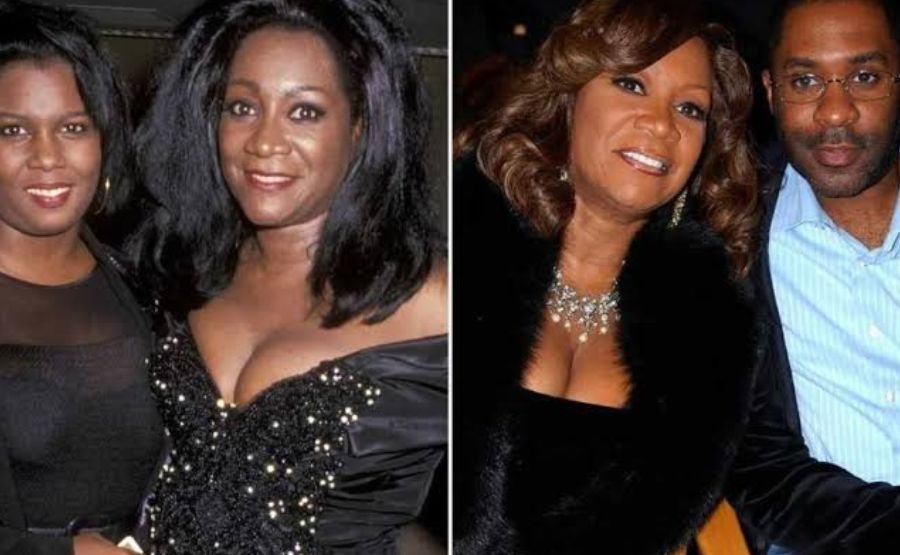
What we know: Jackie was younger than Patti by about a year. They grew up in the same house, same neighborhood, same Southwest Philadelphia world. When Patti’s singing career took off — first with Patti LaBelle and the Bluebelles in the early 1960s, then as LaBelle the group in the 1970s, then as a solo artist — Jackie was not a performer. She was not trying to ride her sister’s coattails. She stayed in the background, reportedly described by Patti as “my biggest fan.”
That phrase — “my biggest fan” — is interesting. Not “my best friend,” though Patti says that too. Not “my most honest critic.” Fan. The word suggests a particular kind of love: unconditional, proud, slightly worshipful, rooted in the particularity of watching someone you know be magnificent to the whole world. Jackie watched Patti become Patti LaBelle and apparently just kept cheering.
She married. She had two children: William (also known as Byl) and Stayce. She lived. She was not famous.
The Brain Tumor Years
Jackie was diagnosed with a brain tumor in her late thirties. The timeline of that diagnosis isn’t precisely documented in public sources, but working backward from her July 1989 death at approximately age 43, the diagnosis likely came somewhere around 1984 or 1985.
That’s a long illness. Brain tumors treated with chemotherapy across five or more years — that’s a sustained, grinding medical experience. Jackie’s chemotherapy treatment took place not far from Patti’s home in New Jersey. And Patti was on tour. That’s the thing. The touring life of a successful recording artist in the late 1980s — you are gone. You come back. You are gone again. And your sister is in a hospital getting chemotherapy and you are in another city.
Patti has talked about this guilt extensively — the guilt of the career that required her absence even when she wanted to be present. She wrote about it in Don’t Block the Blessings, her 1996 memoir. She talked about it on Oprah’s Master Class. She talked about it on the Jesus Calling podcast. She talked about it on Apple Fitness+ in 2023. The story doesn’t get smaller with repetition. It gets bigger.
The Egg Sandwich
Let me tell you what actually happened, as Patti tells it. This is the thing that everyone who follows her life knows, the story she has carried for over thirty-five years.
Jackie was in the hospital. Patti had just come home from a tour. Her Aunt Hattie Mae called on Jackie’s behalf — Jackie couldn’t speak well by this point. The request was simple: could Patti come and make her an egg sandwich? Jackie loved Patti’s cooking. She loved the egg sandwich specifically.
Patti said to her aunt: tell her I’ll make it tomorrow. I’m exhausted after returning home from the journey.
The next morning, Patti got up and started making the sandwich. While she was making it, Aunt Hattie Mae called again. “Sugar, don’t rush with the sandwich. Your sister just passed on.”
That’s the story. That’s it. An egg sandwich she was too tired to make. A fifteen-minute act of love she deferred by one day. There was no following day after that.
“I held that, and I still hold it,” Patti said, years later, crying.
Look, you could argue that Patti LaBelle has told this story so many times it has become almost ritualized — a public performance of grief that she returns to because it functions as a moral teaching. And that’s true. She has explicitly framed it that way, turning the egg sandwich into a lesson about not postponing love. “If I can do it now, I do it now.” That is the conscious lesson she built from Jackie’s death.
But there’s something underneath the moral framing that the framing doesn’t fully contain, and that’s just the specific, unremarkable fact that someone you love asked for an ordinary thing and you said not today, and that turned out to be a decision you couldn’t reverse.
The Adoption
After Jackie died, Patti LaBelle adopted her two children: William and Stayce.
This is not a small thing. Patti was already a mother herself — her biological son Zuri was sixteen when Jackie died. She had already adopted two other boys, Dodd and Stanley, the sons of a neighbor who had also died. So when Jackie died, Patti was already parenting several children, managing a major career, and processing a cascade of family losses.
She took Jackie’s children anyway. That’s the promise she made to her dying sister — presumably in that hospital room during the visits she did manage to make, before the final day she didn’t. She kept it.
William Holte (who also goes by Byl) has had a public life of his own, to some extent. In December 2020 he was tangentially connected to a viral social media incident involving a Pennsylvania congressional candidate. In August 2026, he went public on social media claiming Patti had cut him off for life for supporting Trump politically, and citing the dying promise Patti had made to Jackie as the reason he expected her loyalty to him to be unconditional. That story broke at a cultural moment where the claims went viral. Patti’s side was not publicly confirmed at time of writing.
Stayce Holte runs an organization called the Stacey Holte Love Conglomerate, focused on community unity. She has been public about having bipolar disorder. She posts tributes to Patti on Instagram and was photographed with her and Fantasia Barrino.
The Butterfly and the Music Video
Here is the part of the record I find most affecting, beyond the egg sandwich.
After Jackie’s funeral, Patti LaBelle filmed the music video for “If You Asked Me To.” The song was released in 1989 on the album Be Yourself; it would later be covered by Celine Dion and become a pop standard. The video was filmed the day after the funeral, reportedly in a church. It shows Patti in black, singing, tears rolling down her face.
IMDB’s trivia for the video notes directly: it was filmed the day after Jackie’s funeral. That specificity is not promotional material. That’s a person going to work because work was the only thing available.
At the funeral itself, Patti noticed a yellow butterfly. She has talked about this across the years — that yellow butterfly became, for her, the symbol she associates with Jackie. Every time she sees a butterfly, she says, she thinks of her sister and smiles. It’s a private code the grief built, a way to keep Jackie present in ordinary moments.
The song “Miss You, My Friend” from the same album was also widely understood as a tribute to Jackie, though the connection is less documented than the “If You Asked Me To” video.
The Contradictions in the Record
Let’s be honest about what the sources get wrong, because they get a surprising amount wrong.
The cause of death: several sources say Jackie died of “lung cancer.” Patti’s own accounts, consistently and across decades, say “brain cancer” or “brain tumor.” The 1989 death was from a brain tumor. The lung cancer attribution appears to be a conflation with her older sister Vivian, who died of lung cancer in 1975. IMDB’s LaBelle trivia also says “lung cancer” for Jackie, which appears to be an error carried forward from careless sourcing.
The birth year: Wikitree records list Jackie born “about 1945.” Wikipedia’s Patti LaBelle article confirms 1945–1989. One content farm lists her birth as December 1, 1961 — which would have made her twenty-seven when she died and younger than Patti herself, both impossible. That is a fabrication inserted to fill a template field.
Age at death: she is alternately described as dying at 43 and 44. Born 1945, died July 1989 — if her birthday was before July she was 44; if after, still 43. Most primary sources settle on 43.
Whether Jackie was Patti’s “only surviving sibling”: not accurate. Thomas Hogan Jr., their half-brother, was alive until 2013. He and Patti were the only surviving members of their immediate family after Jackie’s death and their father’s death in 1989.
Final Words
What I think about when I think about Jackie Holte is this: she was a person who mattered intensely to someone whose life mattered enormously to a lot of people, and that mattering filtered down.
The egg sandwich story is not famous because it’s dramatic. It’s famous because it’s the most relatable version of grief guilt that exists. Almost everyone has a version of “I said I’d do it tomorrow and there was no tomorrow.” Patti LaBelle, with one of the most powerful voices of her generation, became the vessel for that specific human failure, and she returned to it for decades because it remained true.
Jackie, meanwhile, exists in the record as a presence defined entirely by her relationship to that voice. She didn’t want to be a star. She was her sister’s biggest fan. She had two children and a life in Philadelphia and a brain tumor in her late thirties and a last wish that was an egg sandwich. She died in July 1989 at forty-three. Her daughter keeps a conglomerate in her name. Her son is an ongoing chapter in a complicated family story.
That’s the life. It was real and it was private and it ended too early, like all three of Patti’s sisters’ lives. And the yellow butterfly shows up in a garden and somewhere Patti LaBelle smiles.
FAQs
1. Who is Jacqueline Holte?
R&B icon Patti LaBelle’s younger sibling was Jacqueline “Jackie” Holte-Padgett.Born around 1945 in Philadelphia, Pennsylvania, she was not a public figure in her own right — she is known primarily through Patti LaBelle’s decades of public tribute and grief. She died in July 1989 from brain cancer at age 43.
2. What did Jacqueline Holte die of?
Brain cancer — specifically a brain tumor for which she had been receiving chemotherapy. Some sources incorrectly report lung cancer, which appears to be a confusion with Patti’s oldest sister Vivian, who died of lung cancer in 1975. Patti LaBelle’s own consistent accounts across interviews and memoir specify brain tumor.
3. What is the egg sandwich story?
The day before Jackie died, she asked Patti — through their Aunt Hattie Mae because Jackie could no longer speak well — to make her an egg sandwich. Patti had just returned from touring, was tired, and said she’d bring it tomorrow. The next morning, while she was making the sandwich, Aunt Hattie Mae called and told her not to rush: Jackie had just died. This story has haunted Patti LaBelle for over thirty-five years and became a core moral teaching in her public life about not postponing love.
4. What happened to Jacqueline Holte’s children after her death?
Patti LaBelle adopted both of Jackie’s children: William Holte (also known as Byl) and Stayce Holte-Padgett. They were raised alongside Patti’s own children and other adopted children. Stayce has remained in Patti’s orbit and celebrates Patti publicly. William went viral in August 2026 claiming Patti had cut him off for political reasons, citing the promise Patti had made to Jackie.
5. What is the yellow butterfly significance?
At Jackie’s funeral, Patti noticed a yellow butterfly. She has since associated butterflies — especially yellow ones — with Jackie. Every time she sees one, she says, she thinks of her sister and smiles. It became a private symbol of Jackie’s ongoing presence.
6. What song did Patti LaBelle record in tribute to Jackie?
Two songs are associated with Jackie’s memory. “If You Asked Me To,” from the 1989 album Be Yourself, had its music video filmed the day after Jackie’s funeral. “Miss You, My Friend,” also from that album, is understood as a direct tribute. “If You Asked Me To” later became a standard when Celine Dion covered it.
7. Were all three of Patti LaBelle’s sisters dead before age 44?
Yes. Vivian Hogan Rogers died of lung cancer in October 1975 at 43. Barbara Holte Purifoy died of colon cancer in 1982 at approximately 41. Jackie Holte died of brain cancer in July 1989 at 43. All three died of cancer before age 44. Patti LaBelle has spoken about fearing she would not reach 50 because of this pattern — she made it to 80 in 2024.
8. Was Jackie Holte involved in Patti’s music career?
No. She was not a performer. Patti described her as “my biggest fan” — someone who supported from the background rather than pursuing any career in the music industry herself. The affection ran deep but Jackie was not involved professionally.
9. When was Jacqueline Holte born?
Approximately 1945. Wikipedia’s Patti LaBelle article confirms 1945–1989. Some genealogical records list her birth as “about 1945.” One content farm erroneously lists December 1, 1961 — an impossible date that would make her younger than Patti and only 27 at death.
10. Did Patti LaBelle write about Jackie in her memoir?
Yes. Don’t Block the Blessings, published by Riverhead Books in 1996, includes detailed accounts of losing all three sisters to cancer, with particular focus on Jackie and the egg sandwich story. The memoir was co-written with Laura B. Randolph.
11. Is Jacqueline Holte confused with anyone else in public records?
Somewhat. She is occasionally confused with Patti LaBelle herself (both were Holtes) or with genealogical records for unrelated Holte family lines. Some sources also incorrectly report her cause of death as lung cancer, attributing to her the cause that killed her older sister Vivian. Her son William goes by the name Byl Holte in some contexts, which creates inconsistency in records about her children.
Explore ideas that enrich your mind with The Aura Magazine.


One Comment